What is Sariya?
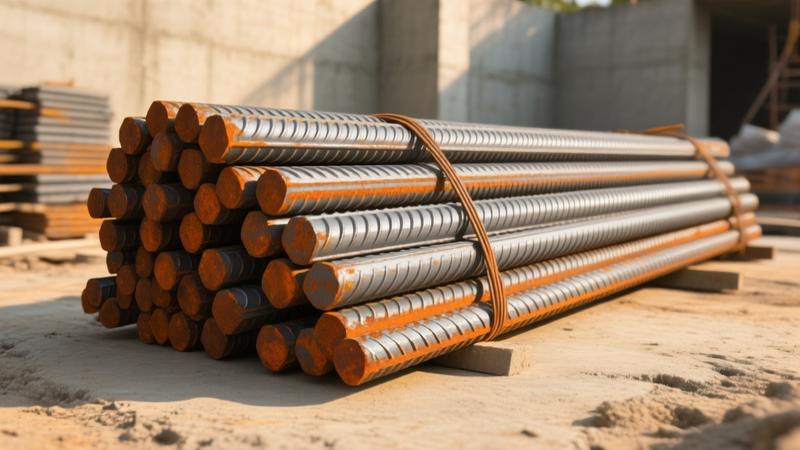
Sariya is the colloquial term for reinforcement steel bars used in concrete work. In North India the word "saria" or "sariya" is heard on every site, while in the South people say "iron rod" or simply "rebar". The name stuck after the 1970s when the government pushed for steel-concrete composite structures. Before that plain mild steel bars were common, but the introduction of high-yield deformed bars made "sariya" synonymous with TMT steel. The term appears in contracts, shop drawings and even in the local hardware shop's ledger.
Historically the first deformed bars came from Europe in the 1950s, but Indian manufacturers started producing them in the late 1970s under the name HYSD (High Yield Strength Deformed). By the early 2000s "TMT" (Thermo-Mechanically Treated) became the buzzword because the process gave better ductility. Today you will see "rebar", "saria", "sariya", "steel rod" used interchangeably. The only thing that matters to a homeowner is whether the bar meets IS 1786 and carries a genuine BIS mark.
Types of Sariya
Not every steel bar is the same. The market offers several families, each made by a slightly different manufacturing route.
- Plain Mild Steel (PMS) - smooth surface, low yield (â 250 MPa). Used only for non-structural work like temporary supports.
- HYSD - cold twisted or cold drawn deformed ribs, yield 415-500 MPa. Older generation, still sold in many towns.
- TMT - bar is heated to about 950 °C, quenched with water, then tempered. This gives a tough outer skin and a ductile core (yield 415-600 MPa). Most common for residential structures.
- TOR Steel - "Thermo-Optimised Reinforcement". Similar to TMT but with a controlled cooling curve that reduces residual stresses. Mostly used in high-rise apartments.
- CTD (Cold Twisted Deformed) - ribs are formed by twisting the bar after cold drawing. Yield 415-500 MPa, cheaper than TMT but less ductile.
- Structural Steel - I-section or channel sections, not bars. Mentioned here for completeness because some small builders mistake them for "big sariya".
Manufacturing differences matter. TMT bars go through a water-jet quench that creates a martensitic skin; HYSD bars are simply twisted. TOR bars use a two-stage cooling (air then water) that saves about 5 % of energy and gives a slightly higher elongation.
Grades and IS Standards
All reinforcement bars for building work must follow IS 1786:2008. The grade code tells you the characteristic yield strength (fy) in MPa.
| Grade | Yield (MPa) | Tensile (MPa) | Elongation (%) | What "D" Means |
|---|---|---|---|---|
| Fe415 | 415 | â 560 | â 15 | Plain rib, standard HYSD |
| Fe500 | 500 | â 620 | â 16 | Higher yield, common TMT |
| Fe500D | 500 | â 620 | â 20 | D = deformed ribs, better ductility |
| Fe550 | 550 | â 660 | â 18 | Used for seismic zones 4 and 5 |
| Fe550D | 550 | â 660 | â 22 | Higher elongation, preferred for columns |
| Fe600 | 600 | â 720 | â 20 | Rare in low-rise homes, mostly for bridges |
The "D" suffix indicates a deformed rib profile that improves bond with concrete. In practice, most contractors ask for Fe500D for slabs and beams, and Fe550D for columns in earthquake-prone areas.
Sizes, Weight and Soot Conversion
Reinforcement bars are sold in diameters from 6 mm to 32 mm. The industry still uses the old "soot" terminology: 1 soot = 6 mm, 2 soot = 8 mm, 3 soot = 10 mm, 4 soot = 12 mm. Anything above 12 mm is quoted directly in millimetres.
Weight per meter is calculated by the formula 0.00617 x d2 (where d is diameter in mm). Rough numbers:
- 6 mm - 0.22 kg/m
- 8 mm - 0.40 kg/m
- 10 mm - 0.62 kg/m
- 12 mm - 0.89 kg/m
- 16 mm - 1.58 kg/m
- 20 mm - 2.47 kg/m
- 25 mm - 3.85 kg/m
- 32 mm - 6.31 kg/m
Bars are sold in bundles of 10 m, 12 m or 20 m. A 12 m bundle of 12 mm TMT weighs about 10.7 kg (+/- 7 % tolerance). The tolerance is mandated by IS 1786; any bundle outside +/- 7 % should be rejected on site.
Where Each Size Fits in a Typical House
Design reasoning is simple: larger bars resist higher bending moments, smaller bars are enough for confinement.
- 6 mm-8 mm - stirrups, ties, and footings for light loads. 8 mm is the minimum for column ties in most RCC frames.
- 10 mm-12 mm - one-way slabs and roof beams. In a 150 mm thick slab, two layers of 12 mm Fe500D is the norm.
- 16 mm-20 mm - main beams, lintels, and roof trusses. A 20 mm bar in a 250 mm wide beam carries about 30 kN of shear.
- 25 mm-32 mm - columns and shear walls. A 25 mm Fe550D in a 250 mm square column gives a compressive capacity of roughly 350 kN.
Using a larger bar than required raises cost without structural benefit. Conversely, undersizing is a recipe for cracks and, in worst cases, collapse.
Brand Comparison (2026 Prices)
| Brand | Typical Price (Rs. Per kg) | Price per Quintal | BIS Mark | Notes |
|---|---|---|---|---|
| TATA Tiscon | Rs. 58-60 | Rs. 5,800-6,000 | Yes | Premium of Rs. 5-8 per kg over base; reliable supply chain. |
| JSW Neosteel | Rs. 55-57 | Rs. 5,500-5,700 | Yes | Good ductility, wide dealer network. |
| SAIL SEQR | Rs. 53-55 | Rs. 5,300-5,500 | Yes | Government backing, often slightly heavier bars. |
| Jindal Panther | Rs. 56-58 | Rs. 5,600-5,800 | Yes | Strong in South India, consistent quality. |
| Shyam Steel | Rs. 52-54 | Rs. 5,200-5,400 | Yes | Budget-friendly, but occasional weight variance. |
| Kamdhenu | Rs. 50-52 | Rs. 5,000-5,200 | Yes | Cheapest mainstream brand; good for footings. |
| Captain | Rs. 54-56 | Rs. 5,400-5,600 | Yes | Strong presence in Maharashtra, reliable BIS lab reports. |
| Rungta | Rs. 51-53 | Rs. 5,100-5,300 | Yes | Popular in Central India; occasional mix-bundle issues. |
All listed brands carry a BIS mark, but the mark can be forged. Always ask for the mill test certificate (MTC) and cross-check the serial number on the BIS website.
How to Verify Sariya Quality at Site
Five practical checks save you from a costly mistake.
- Bend Test - take a 12 mm bar, bend it to a U-shape. It should not crack and should spring back slightly. If it snaps, the steel is brittle.
- Weight Test - weigh a 12 m bundle on a portable scale. Compare with the theoretical weight (12 m x 0.89 kg/m = 10.68 kg). Anything beyond +/- 7 % is suspect.
- Rib Pattern Inspection - genuine TMT ribs are sharp and uniform. Blunted or irregular ribs indicate cold-drawn or counterfeit bars.
- BIS Mark - look for the white circular BIS logo with the grade code. Verify the 10-digit number on the BIS portal.
- Manufacturer Tag - each bundle should carry a tag with mill name, grade, diameter, and heat number. Match these details with the MTC.
The MTC is a PDF that lists chemical composition, mechanical properties, and heat treatment parameters. If the document is missing or the heat number is duplicated across different bundles, reject the shipment.
Common Frauds and What to Do About Them
Fraud is rampant because most homeowners rely on the contractor's word.
- Underweight Bars - bundles that weigh 10-15 % less. The cheap way to boost profit. Spot them with a simple scale.
- Re-badged Chinese Imports - low-cost Chinese TMT stamped with an Indian brand logo. They often lack the required ductility.
- Fake BIS Marks - printed stickers that peel off under water. Verify online before accepting.
- Mixed Bundles - a batch that contains different diameters or grades. This ruins the design calculations.
If you discover any of the above, raise the issue with the contractor immediately. If they refuse, file a complaint with the Bureau of Indian Standards (BIS) regional office and with the local consumer court. Keep the MTC, weigh-sheet and photographs as evidence.
Buying Tips for Homeowners and Small Builders
Negotiation starts with knowing the market rate. In 2026 the average price for Fe500D TMT is Rs. 56 per kg. A 1500 sq ft house with a typical RCC frame needs about 12-15 tons of steel, i.e. Rs. 6-8 lakhs.
- Cash vs Credit - dealers give a 2-3 % discount for cash payment. Credit terms (30-45 days) add roughly Rs. 1-2 per kg.
- Dealer Markup - expect a markup of Rs. 3-5 per kg over the mill price. Compare at least three dealers before signing.
- Quantity Calculation - for a 1500 sq ft house, a rule-of-thumb is 0.07 % of total built-up area in tonnes. That gives 1.05 tonne per 1500 sq ft. Multiply by a safety factor of 1.2 for wastage, you order ~1.3 tonne per 1000 sq ft, i.e. About 2 tonne for 1500 sq ft. Adjust based on structural drawings.
- Timing - place the order after foundation excavation but before column casting. This ensures you get fresh steel and avoids price spikes during monsoon procurement rush.
- Bulk Purchase - if you are building a row of houses, buying a 20-tonne lot directly from the mill can shave off Rs. 5-7 per kg.
Never rely on a single dealer's word. Get the MTC, do a quick weight check, and keep a record of the BIS number. A few minutes of verification saves lakhs later.
Related: TMT Bar Weight Chart 2026 - 6mm to 25mm Per Piece and Per Meter
Related: Mild Steel vs TMT Steel - Which is Better for House Construction in India 2026