
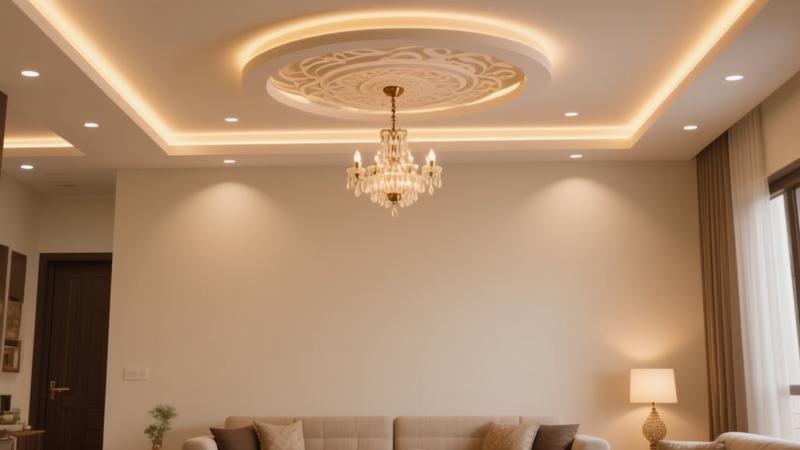
Why a False Ceiling Matters in 2026 Indian Homes
A well-designed false ceiling does more than hide ducts and wiring. It can lower the perceived ceiling height, improve acoustics, and give a room a defined character. With electricity rates climbing and daylight becoming scarce in high-rise apartments, a false ceiling that integrates LED lighting saves energy and adds style.
Most contractors still treat false ceilings as a cosmetic afterthought. The result is cheap POP that cracks within a year or a gypsum board that sags under humidity. Below are practical patterns, material choices and lighting tricks that work in Indian climates and budgets.
Pattern Play - Which Ceiling Shape Fits Your Space?
Modern Indian homes favour clean lines but also love a bit of drama. Here are the six patterns that dominate 2026 projects.
- Single-layer flat - simplest, cheapest, good for small rooms where you want a seamless look.
- Double-layer - creates a subtle depth, useful in living rooms with high ceilings (3.6 m+).
- Tray ceiling - a recessed centre that mimics a sunken pool. Works well in master bedrooms and lounge areas.
- Cove ceiling - a curved transition from wall to ceiling, perfect for soft lighting in dining rooms.
- Peripheral (perimeter) molding - a thin strip around the room that hides LED strips; ideal for hallway and study.
- Geometric grids - honeycomb, chevron or diamond patterns made from metal or wood slats; adds a contemporary vibe to open-plan kitchens.
Pick a pattern that matches the room's function. A heavy tray in a bedroom can feel oppressive; a simple single-layer in a bathroom avoids water-damage risks.
Material Showdown - POP, Gypsum, Wood, Metal, Stretch
Each material has a price tag, installation quirk and lifespan. The table below sums up the numbers you'll face in 2026.
| Material | Cost per sq ft (incl. Labour) | Typical thickness | Water resistance | Fire rating | Finish options |
|---|---|---|---|---|---|
| POP (Plaster of Paris) | Rs. 70-90 | 12-15 mm | Low - needs waterproof coating | 30 min (non-fire-retardant) | Paint, textured finish |
| Gypsum board (Gyproc, USG Boral) | Rs. 110-140 | 9-12 mm | Medium - better than POP but still vulnerable | 1 hr fire-retardant (GR-type) | Smooth paint, laminated panels |
| Wood (teak, sheesham, engineered MDF) | Rs. 250-350 | 15-20 mm | Very low - requires sealant | Varies, usually 30 min | Varnish, lacquer, painted MDF |
| Metal (aluminium, pre-finished steel) | Rs. 180-220 | 0.8-1.2 mm | High - rust-proof coatings available | Non-combustible | Powder-coat, brushed finish |
| Stretch (PVC or polyester fabric) | Rs. 300-380 | 0.5-1 mm (fabric) | Excellent - water-tight | Non-combustible (PVC) or flame-retardant fabric | Printed graphics, solid colour |
POP remains the cheapest choice but in humid coastal cities it will need a waterproof primer and regular repainting. Gypsum boards from Gyproc or USG give a smoother surface and a better fire rating, making them a safe bet for living rooms and kids' bedrooms.
Wood adds warmth but the cost spikes quickly. If you love the look, use engineered MDF for the bulk and teak veneer for accent strips - you'll stay under Rs. 300 per sq ft.
Metal panels are popular in upscale apartments because they hide dust and are easy to clean. Aluminium from Jindal or pre-finished steel from Tata Steel cost about Rs. 200 per sq ft installed.
Stretch ceilings are the go-to for wet areas like bathrooms and balconies. The fabric can be printed with a mural or kept plain white for a spa feel. Expect Rs. 350-380 per sq ft including the tensioning system.
Lighting Inside the Ceiling - Recessed vs Cove LEDs
LED tech in 2026 lets you embed strips and downlights without bulky fixtures.
- Recessed downlights - 5-Watt warm white (3000 K) chips fit in 40 mm housings. For a 20 ft x 15 ft living room, eight of these give even illumination at about Rs. 2,500 per fixture.
- Cove LED strips - 12 V flexible strips, 6 W per metre, colour temperature 3000-6500 K. Add a dimmer and you can shift from warm ambience to cool task lighting.
- RGB strips - same power draw, controlled via Bluetooth or Zigbee. Popular in teenage bedrooms; a 5-metre RGB strip costs Rs. 1,200.
Tip: run the LED driver outside the ceiling cavity to avoid heat build-up. In a tray ceiling, hide the driver in the recessed centre and use a diffuser panel for a soft glow.
Vastu Touch - Aligning Ceiling Design with Energy Flow
Vastu doesn't demand a specific material, but it does care about direction and shape.
- North-East corners should have a light-coloured, smooth finish - POP or gypsum painted white works best.
- South-West corners benefit from a darker tone or wood panel to ground the energy.
- A tray or cove facing East is said to invite sunrise energy; keep the centre low and the edges higher.
- Avoid sharp geometric protrusions directly above the main entrance - they are believed to block positive flow.
These guidelines are simple to follow without hiring a Vastu consultant. Just plan the pattern orientation during the design stage.
Room-by-Room Recommendations
Below is a practical checklist for each major space. Prices assume a 200 sq ft ceiling area unless noted.
Living Room - The Showpiece
- Pattern: Double-layer with a shallow tray (30 cm depth) for a subtle depth.
- Material: Gypsum board with a smooth finish; cost Rs. 130 x 200 = Rs. 26,000.
- Lighting: Four recessed warm-white downlights + cove LED strip along the perimeter, total Rs. 8,000.
- Vastu: Keep the tray centre facing East; paint light cream.
- Common mistake: Using POP in a high-humidity city; it cracks within 2-3 years.
Master Bedroom - Calm and Cozy
- Pattern: Peripheral moulding with hidden LED strip, no heavy tray.
- Material: Engineered MDF wood panels for a warm look, Rs. 280 x 180 = Rs. 50,400.
- Lighting: Warm white cove LED (3000 K) at Rs. 5,000; add a single dimmable downlight above the bedside.
- Vastu: South-West corner wood, North-East POP painted white for balance.
- Common mistake: Over-loading the ceiling with heavy chandeliers; the gypsum can sag.
Kitchen - Functional and Moisture-Resistant
- Pattern: Single-layer flat with a thin aluminium peripheral strip.
- Material: Stretch PVC ceiling, Rs. 340 x 150 = Rs. 51,000, fully waterproof.
- Lighting: LED strip under the upper cabinets (12 V, 6 W/m) - Rs. 3,000.
- Vastu: Keep the ceiling light colour in the North-East zone; avoid dark wood.
- Common mistake: Installing recessed lights too close to the countertop; heat can damage the laminate.
Bathroom - Spa-Like Survival
- Pattern: Flat stretch ceiling with a sealed edge.
- Material: PVC stretch, Rs. 360 x 80 = Rs. 28,800.
- Lighting: Waterproof IP65 downlights, 3 W each, Rs. 1,200 per unit.
- Vastu: North side of bathroom should have a smooth white finish.
- Common mistake: Using POP without waterproofing - it peels off in weeks.
Hallway & Staircase - Guiding Light
- Pattern: Peripheral cove with LED strip.
- Material: Light-weight metal panels, Rs. 190 x 100 = Rs. 19,000.
- Lighting: RGB strip at the stair tread for night-time visibility - Rs. 1,500.
- Vastu: Keep the hallway ceiling light colour bright to aid movement.
- Common mistake: Ignoring expansion joints; metal expands and can buckle.
Common Mistakes Homeowners Make
Even after reading dozens of blogs, many still fall into the same traps.
- Skipping the moisture barrier - POP and gypsum need a primer and a waterproof membrane in bathrooms and kitchens.
- Choosing the cheapest contractor - a Rs. 15 per sq ft POP job often means substandard mix and no reinforcement.
- Over-loading the ceiling - hanging heavy acoustic panels or chandeliers on a single-layer POP will cause sagging.
- Not coordinating with structural depth - a false ceiling that cuts into the slab's reinforcement reduces load-bearing capacity.
- Ignoring fire ratings - in multi-storey apartments, a non-fire-rated POP can be a safety hazard. Gypsum gives a full hour rating.
- Leaving gaps for expansion - metal and stretch systems need 2-3 mm gaps at corners; many DIY installs seal them tightly, leading to cracks.
Cost Planning - How to Budget Wisely
Below is a quick cost calculator for a 1,500 sq ft house with mixed materials.
| Room | Material | Area (sq ft) | Cost per sq ft | Total Cost (Rs.) |
|---|---|---|---|---|
| Living | Gypsum | 200 | 130 | 26,000 |
| Master Bedroom | MDF Wood | 180 | 280 | 50,400 |
| Kitchen | Stretch PVC | 150 | 340 | 51,000 |
| Bathroom | Stretch PVC | 80 | 360 | 28,800 |
| Hallway | Aluminium Metal | 100 | 190 | 19,000 |
| Total | Rs. 175,200 |
Add about 15 % for lighting fixtures, wiring and labour contingencies. Expect the final bill to land around Rs. 200,000 for a mid-range finish.
Putting It All Together - My Recommendation for a 2026 Indian Home
If you want a ceiling that lasts ten years, looks good in every season and doesn't break the bank, go for a hybrid approach:
- Gypsum board in living and bedroom areas for a smooth paint finish and fire safety.
- Stretch PVC in kitchen and bathroom for water-tightness.
- Metal peripheral strips in hallways for durability and easy LED integration.
- Use recessed warm-white LEDs for general lighting and cove RGB strips only in teenage rooms.
- Follow the simple Vastu cues - light colours in the North-East, wood in the South-West.
This mix keeps the average cost around Rs. 150-180 per sq ft, gives you flexibility in lighting, and avoids the most common failures.
Related: False Ceiling Material Comparison: Gyproc vs POP vs PVC Guide for Indian Homes