
Introduction
Choosing the right tiles for an Indian home is more than a matter of aesthetics; it is a decision that impacts durability, comfort, and long-term maintenance costs. India's diverse climate ranges from the humid coastal regions of Kerala to the scorching heat of Rajasthan, and each environment places different stresses on flooring materials. Tiles that perform well in a dry, arid climate may suffer from moisture-related issues in a humid zone, while those designed for high temperature resistance may be unnecessarily expensive for cooler regions.
Modern Indian construction trends have shifted from traditional cement floors to a wide variety of tile options that cater to contemporary design sensibilities. Open-plan living spaces, high-traffic entryways, and sleek kitchen islands all demand tile solutions that combine strength, slip resistance, and visual appeal. Selecting the appropriate tile type, size, and finish early in the design process prevents costly rework, ensures a harmonious look across different rooms, and protects the investment against premature wear.
In this comprehensive guide we will explore every major tile category available in India, provide a room-by-room selection framework, detail quality testing methods, and share maintenance best practices. By the end of this article you will have a clear roadmap to make an informed decision that matches your climate, lifestyle, and design aspirations.
Types of Tiles Available in India
Ceramic Tiles
Ceramic tiles are made from a blend of natural clay, sand, and other minerals that are pressed into shape and fired at temperatures ranging from 800°C to 1250°C. The surface is usually glazed, which creates a hard, water-resistant coating and allows for a wide variety of colours, patterns, and textures. Because the glaze sits on top of the body, ceramic tiles are relatively easy to replace if a single tile gets damaged.
The main advantages of ceramic tiles include affordability, a broad design library, and good resistance to stains when properly glazed. They are lightweight, making them suitable for both floor and wall applications. However, the glazed surface can chip or wear over time, especially in high-traffic areas. Ceramic tiles also have higher water absorption (typically between 3% and 7%) compared to vitrified or porcelain tiles, which makes them less ideal for outdoor or moisture-prone spaces.
Best uses for ceramic tiles are residential bathrooms, kitchen backsplashes, and interior walls where design flexibility is a priority over extreme durability. For homeowners seeking a cost-effective solution with endless style options, ceramic tiles remain a popular choice.
Vitrified Tiles
Vitrified tiles are produced by adding a higher proportion of silica and quartz to the raw mix, which undergoes a vitrification process at temperatures above 1200°C. This results in a dense, non-porous body that is almost impermeable to water. Vitrified tiles are classified into three main types: Double-Charged Glazed (DCG), Lappet, and Full-Body.
DCG tiles have a glazed surface on both sides, providing a uniform colour and shine. Lappet tiles feature a glazed top layer with a different colour or pattern on the bottom, creating a subtle contrast that is visible at the edges. Full-Body vitrified tiles have colour and pattern throughout the entire thickness of the tile, so wear does not affect the appearance. Vitrified tiles typically exhibit water absorption <= 0.5%, making them suitable for both indoor and limited outdoor applications.
Because of their low porosity, vitrified tiles are highly resistant to stains, scratches, and chemical attacks. They are ideal for high-traffic living rooms, commercial lobbies, and areas where a sleek, uniform look is desired. The main drawback is the higher cost compared to ceramic tiles and the requirement for a well-prepared sub-floor to avoid cracking due to their rigid nature.
Porcelain Tiles
Porcelain tiles are a subtype of vitrified tiles, distinguished by an even higher density and lower water absorption (typically <= 0.5%). They are made from refined clay, kaolin, and feldspar, then fired at temperatures of 1200°C to 1300°C. The high firing temperature creates a hard, glass-like surface that is both stain-resistant and highly durable.
Porcelain tiles can be classified as glazed or through-body. Glazed porcelain offers a glossy finish with vibrant colours, while through-body porcelain maintains colour consistency even if the surface is worn. Their low porosity makes them ideal for wet areas, such as bathrooms and kitchens, as well as outdoor patios where freeze-thaw cycles are a concern.
One of the key benefits of porcelain tiles is their ability to mimic natural stone, wood, or even concrete without the associated maintenance. However, their high density makes them heavier, requiring stronger sub-floor support and specialized cutting tools during installation. Porcelain is an excellent choice for homeowners who want a premium look with minimal upkeep.
Marble Tiles
Marble is a natural metamorphic stone formed from limestone under high pressure and temperature. Its characteristic veining and polished surface lend an unmistakable sense of luxury and elegance. Marble tiles are cut from large slabs and can be finished in polished, honed, brushed, or tumbled styles, each offering a distinct tactile experience.
While marble provides a timeless aesthetic, it is a relatively soft stone with a Mohs hardness of around 3 to 4. This makes it susceptible to scratches, etching from acidic substances, and staining if not properly sealed. Marble also has a higher water absorption rate (about 0.5% to 1%) compared to vitrified or porcelain tiles, which can lead to moisture penetration in humid climates.
Marble tiles are best suited for low-traffic areas such as master bedroom floors, bathroom vanity tops, and decorative wall panels. Regular sealing, prompt cleaning of spills, and use of pH-neutral cleaners are essential to maintain the stone's appearance over time. For homeowners who prioritize opulence and are willing to invest in maintenance, marble remains a top choice.
Granite Tiles
Granite is an igneous rock formed from the slow crystallisation of magma beneath the Earth's surface. It is composed mainly of quartz, feldspar, and mica, giving it a speckled appearance and a high compressive strength. Granite tiles are cut from massive slabs and are available in polished, flamed, or brushed finishes.
Granite's hardness (Mohs 6 to 7) makes it extremely resistant to scratches, heat, and impact. Its natural low porosity (typically <= 0.5% after sealing) provides good resistance to stains and moisture, though sealing is still recommended to protect against oil-based substances. Granite tiles are ideal for kitchen countertops, high-traffic floor areas, and outdoor patios where durability is paramount.
The main considerations when using granite are the need for periodic resealing to maintain its resistance to staining, and the higher cost associated with quarrying and transporting large slabs. Proper installation with a suitable adhesive and a level substrate is crucial to avoid cracking due to the tile's rigidity.
Glass Tiles
Glass tiles are manufactured from recycled or virgin glass that is melted and then cut into thin, uniform pieces. They are available in a wide range of colours, finishes (transparent, frosted, iridescent), and shapes (square, rectangular, mosaic). Glass tiles are most commonly used as decorative accents rather than primary flooring due to their fragility.
The advantages of glass tiles include their reflective quality, which can visually enlarge a space and enhance natural light. They are also non-porous, making them resistant to stains and moisture. However, glass tiles are prone to chipping and cracking under heavy impact, and their smooth surface can become slippery when wet unless a textured finish is selected.
Typical applications for glass tiles are bathroom walls, kitchen backsplashes, pool surrounds, and feature walls in living rooms. When used on floors, it is essential to choose a slip-resistant, textured variety and install a proper underlayment to minimise the risk of breakage.
Mosaic Tiles
Mosaic tiles consist of small individual pieces-often 1Ã1 inch or smaller-arranged in a pattern or a sheet (known as a mesh). They can be made from ceramic, porcelain, glass, natural stone, or metal, offering endless design possibilities. Mosaics are typically used to create visual interest, intricate patterns, or accent zones.
Because of their small size, mosaic tiles are flexible and can conform to irregular surfaces, curved walls, and intricate shapes. They are also easier to install in tight spaces where larger tiles would be difficult to maneuver. However, mosaics require more grout lines, which can increase maintenance effort and may be prone to staining if not sealed properly.
Popular uses for mosaic tiles include bathroom shower niches, kitchen backsplashes, entryway borders, and decorative strips in living rooms. When selecting mosaics, consider the material's durability (e.g., porcelain mosaics for high-traffic areas) and the colour palette that complements the overall interior design.
Anti-skid Tiles
Anti-skid tiles are engineered with a textured surface or embedded aggregates that increase friction and reduce the risk of slipping, especially when the floor is wet. These tiles can be made from ceramic, vitrified, or natural stone, and are often certified for safety in public spaces.
In India, anti-skid tiles are mandatory in certain areas such as swimming pool decks, commercial bathrooms, and industrial kitchens. For residential use, they are highly recommended in bathrooms, balconies, and entryways where water or moisture can create slippery conditions.
The primary benefit of anti-skid tiles is safety without compromising on design; many manufacturers offer a range of colours and patterns that blend seamlessly with interior décor. The main drawback is that the textured surface may collect dust and require more frequent cleaning to maintain its slip-resistant properties.
How to Choose Tiles for Different Rooms
Living Room
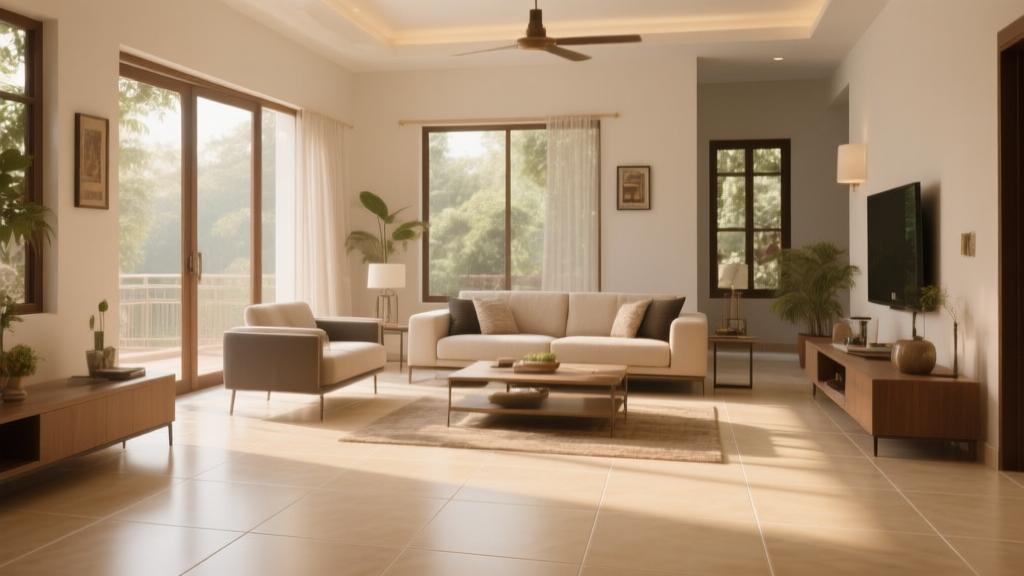
The living room experiences moderate to heavy foot traffic, and it often serves as the visual focal point of a home. Tile selection should balance durability with aesthetic appeal. Large-format vitrified tiles (e.g., 600Ã1200 mm) create a seamless, spacious look and are resistant to scratches and stains, making them ideal for high-traffic living areas.
For a warmer ambience, consider porcelain tiles with a wood-look finish or matte-glazed ceramic tiles that mimic natural textures. If the living room receives a lot of natural light, lighter coloured tiles can enhance brightness, while darker tones add a sense of coziness. Incorporating a decorative accent, such as a mosaic border or a patterned anti-skid tile at the entrance, can add visual interest without compromising durability.
Bedroom
Bedrooms prioritize comfort, warmth, and noise reduction. While tiles are more common in Indian homes due to climate considerations, the bedroom floor should feel softer underfoot. Porcelain tiles with a matte finish or honed marble tiles provide a luxurious feel while maintaining durability.
To improve acoustic performance, choose tiles with a higher coefficient of friction and consider installing an underlayment that dampens sound transmission. Warm colour palettes-such as beige, soft greys, or pastel shades-create a relaxing environment. A carpet runner over a tile floor can further enhance comfort and reduce noise, especially in shared apartments.
Kitchen
The kitchen demands tiles that resist stains, heat, and moisture. A glazed ceramic tile with a high gloss finish is easy to clean and offers excellent resistance to oil and food spills. For the cooking area, consider porcelain tiles with a low water absorption rate (<= 0.5%) and a slip-resistant surface to ensure safety.
Backsplashes benefit from smaller mosaic tiles or glass tiles that can handle frequent cleaning and provide a decorative focal point. Choose a colour that complements the countertop material-neutral tones for a timeless look, or bold colours for a modern statement. Ensure the tiles have a high Mohs hardness (>= 7) to withstand heavy cookware and chopping board impacts.
Bathroom
Bathrooms are high-moisture zones where water-tightness and slip resistance are paramount. Porcelain tiles with a water absorption rate <= 0.5% are ideal for both floor and wall applications. Anti-skid vitrified tiles for the floor reduce the risk of slipping when wet, while glazed ceramic tiles with a smooth finish work well for wall cladding.
Grout colour plays a crucial role in maintenance; lighter grout can brighten the space but may show stains more easily, whereas darker grout hides discoloration. Use epoxy-based grout for superior water resistance and durability. Consider installing a waterproof membrane beneath the tile layer to protect the substrate from moisture ingress.
Balcony
Balconies are exposed to weather extremes, including direct sunlight, rain, and temperature fluctuations. Tiles used here must have excellent UV stability and thermal expansion properties. Vitrified tiles with a high frost resistance rating and low water absorption are suitable for outdoor balconies.
Full-body vitrified tiles or porcelain tiles with a textured finish provide both durability and slip resistance. Ensure the tiles are installed with a flexible adhesive that accommodates thermal movement, and use expansion joints spaced at regular intervals to prevent cracking. A sealant on the grout lines adds extra protection against water penetration.
Entrance / Lobby
The entrance or lobby is the first impression of a home and experiences the highest foot traffic. Tiles here should be robust, easy to clean, and visually striking. Large-format vitrified tiles (e.g., 800Ã800 mm) create a grand, seamless appearance, while anti-skid tiles improve safety for visitors.
Consider using a combination of textures-polished vitrified tiles for the central area and a darker, anti-skid border to delineate the entrance zone. A high-gloss finish reflects light, making the space appear larger. Ensure the chosen tiles have a high compressive strength (>= 30 MPa) to withstand heavy loads.
Tile Size Guide
| Tile Size (mm) | Typical Use | Advantages | Disadvantages |
|---|---|---|---|
| 200Ã200 | Bathrooms, small rooms, accent zones | Easy to handle, fits tight spaces, lower material waste | More grout lines, can make space feel smaller |
| 300Ã300 | Standard residential floors, kitchens | Balanced size, moderate grout visibility, versatile | May require more cuts in irregular rooms |
| 300Ã600 | Living rooms, hallways, larger bedrooms | Creates illusion of larger area, fewer grout lines than smaller tiles | Requires careful layout to avoid uneven edges |
| 600Ã600 | Open-plan living spaces, commercial lobbies | Minimal grout, sleek look, fast installation | Heavier, may need reinforced sub-floor |
| 600Ã1200 | Modern living rooms, large hallways, boutique hotels | Maximum visual continuity, large format reduces joints | Complex handling, higher risk of cracking if substrate is uneven |
| Mosaic (10Ã10 mm to 30Ã30 mm) | Shower walls, backsplashes, decorative borders | Highly flexible design, conforms to curves, creates intricate patterns | More grout maintenance, time-consuming installation |
When selecting a tile size, consider the overall dimensions of the room, the desired visual effect, and the structural capacity of the floor. Larger tiles can make a space appear bigger but demand a perfectly level substrate to avoid lippage. Smaller tiles provide greater flexibility for intricate layouts but increase the number of grout lines, which may require more frequent cleaning.
For insights on modern tile trends, see Why Large Format Tiles Are Perfect for Modern Indian Homes.
For Indian homes with traditional layouts, a mix of medium (300Ã300) and large (600Ã600) tiles often offers the best compromise between aesthetics and practicality. In heritage homes where floor levels may be uneven, opting for smaller sizes reduces the risk of cracking and simplifies the installation process.
How to Check Tile Quality
- Water Absorption Test
Measure the tile's ability to absorb water, an essential factor for durability in humid Indian climates. Follow these steps:
- Weigh the dry tile (Wdry).
- Immerse the tile in water for 24 hours at room temperature.
- Remove, surface-dry, and weigh again (Wwet).
- Calculate absorption % = ((Wwet - Wdry) / Wdry) Ã 100.
Acceptable limits:
- Ceramic tiles: <= 7% (preferably <= 5%).
- Vitrified & porcelain tiles: <= 0.5%.
- Natural stone (marble, granite): <= 1% after proper sealing.
- Scratch Test (Mohs Hardness)
Determine resistance to abrasion by using a set of calibrated hardness picks. Press each pick onto the tile surface with uniform pressure. The lowest pick that leaves a visible mark indicates the tile's Mohs hardness.
Recommended minimum hardness:
- Flooring tiles: >= 7 (equivalent to quartz).
- Wall tiles: >= 5 (e.g., feldspar).
Tiles that fail this test may show wear in high-traffic areas within months.
- Sound Test (Lippage Detection)
Place a hard rubber mallet on the tile and gently tap. Listen for a clear, resonant "ding" which indicates a flat surface. A dull thud suggests unevenness or internal cracks.
Another method is to use a straight edge (2-meter level) across adjacent tiles. Any audible click or visual gap > 0.5 mm indicates lippage, which can lead to trip hazards.
- Flatness Test (Tolerances)
Flatness is measured by placing a calibrated level or laser profiler on the tile surface. International standards (ISO 13006) specify a tolerance of <= 0.5 mm deviation over a 2-meter length for floor tiles.
Tools required:
- Digital level or laser line.
- Flatness gauge (e.g., a 100 mm straight edge with feeler gauge).
If the deviation exceeds the limit, the tile may cause uneven wear or create a tripping risk once installed.
Tile Laying Patterns
- Straight Lay - Tiles are placed in a linear grid, aligning both edges parallel to the walls. This pattern is the simplest to install, offers a clean, modern look, and works well with large format tiles. It maximises material usage and minimises waste.
- Diagonal Pattern - Tiles are set at a 45-degree angle to the walls, creating a dynamic visual effect that can make a small room appear larger. Diagonal layouts require more cuts, increasing waste and labour, but they hide imperfections in the sub-floor.
- Herringbone Pattern - Rectangular tiles are laid in a V-shaped arrangement, resembling the bones of a fish. This pattern adds a sense of movement and luxury, especially when using wood-look porcelain. Installation is more complex, requiring precise alignment and often a layout template.
- Checkerboard Pattern - Alternating tiles of contrasting colours (commonly black and white) create a classic, timeless design. It works best with square tiles (e.g., 300Ã300 mm) and is popular in kitchens and bathrooms for a retro aesthetic.
- Subway Pattern - Tiles are laid in a running bond, similar to traditional subway tiles in New York. Typically used with rectangular tiles of 100Ã300 mm, this pattern adds subtle texture and works well on both walls and floors.
- Basket Weave - Pairs of rectangular tiles are arranged to mimic woven fabric. This pattern provides visual interest while maintaining a relatively simple installation process compared to herringbone.
Common Mistakes to Avoid When Choosing Tiles
- Ignoring Climate Impact - Selecting high-porosity ceramic tiles for a coastal home can lead to water absorption, mould growth, and premature degradation. Always match tile water absorption ratings with local humidity levels.
- Choosing Tiles Solely on Price - Low-cost tiles may lack durability, leading to frequent replacements. Consider life-cycle cost, including maintenance, sealing, and potential repairs.
- Neglecting Slip Resistance - Installing polished vitrified tiles in a bathroom or balcony without anti-skid properties increases the risk of falls, especially for children and elderly occupants.
- Overlooking Sub-floor Preparation - A uneven or weak sub-floor can cause lippage, cracking, and tile movement. Ensure proper leveling, moisture barrier, and reinforcement before laying tiles.
- Incorrect Tile Size for Room Dimensions - Using large format tiles in a small bedroom can make the space feel cramped, while tiny mosaics in a large hall may look busy and require excessive grout maintenance.
- Mixing Incompatible Grout Colours - Light grout with dark tiles can stain easily, while dark grout with light tiles shows wear. Choose a grout colour that complements the tile and consider epoxy grout for high-moisture areas.
- Failing to Account for Expansion Joints - Tiles expand and contract with temperature changes. Omitting expansion joints in large floor areas can lead to cracks and tile pop-outs.
- Skipping Sealant for Natural Stone - Marble and granite require periodic sealing to prevent staining and water penetration. Unsealed stone will quickly develop etches and discoloration.
Maintenance Tips for Different Tile Types
Ceramic Tiles
Clean ceramic tiles with a mild detergent and warm water. Avoid abrasive scrubbers that can damage the glaze. For stubborn stains, use a pH-neutral tile cleaner. Seal the grout lines annually with a penetrating grout sealer to prevent mould growth, especially in humid bathrooms.
Vitrified Tiles
Vitrified tiles are low-maintenance. Sweep or vacuum regularly to remove grit that can cause scratches. Mop with a neutral-pH cleaner; avoid acidic cleaners like vinegar, which can dull the surface. For anti-skid tiles, use a soft brush to clean the textured surface and prevent buildup.
Porcelain Tiles
Porcelain tiles resist stains, but the grout may require attention. Use a soft mop and a non-acidic cleaner. For high-traffic areas, consider applying a nano-coating that enhances water repellency and makes cleaning easier. Avoid dragging heavy objects directly on the tile to prevent chipping.
Marble Tiles
Marble is sensitive to acids. Clean with a pH-neutral marble cleaner or a solution of mild soap and water. Immediately wipe up spills of coffee, wine, or citrus to prevent etching. Re-seal marble surfaces every 6-12 months, depending on usage, using a high-quality penetrating sealer.
Granite Tiles
Granite is robust but benefits from periodic sealing. Clean with a granite-specific cleaner or a mixture of mild soap and warm water. Avoid abrasive pads. Apply a sealant every 12-18 months, especially in kitchens where oil and grease are common.
Glass Tiles
Glass tiles shine best when cleaned with a glass-specific cleaner or a mixture of water and a few drops of dish soap. Use a non-abrasive sponge to avoid scratching. For textured glass tiles, a soft brush can help remove grime from the surface. Avoid chlorine-based cleaners, which can cause clouding.
Mosaic Tiles
Mosaics require careful grout maintenance. Use a grout brush to scrub the lines and a grout-safe cleaner. Seal the grout annually to prevent staining. If the mosaic is made of natural stone, follow the specific sealing and cleaning guidelines for that stone type.
Anti-skid Tiles
Regularly remove dust and debris from the textured surface using a soft broom or vacuum. Mop with a neutral-pH cleaner; avoid waxes or polishing compounds that can fill the micro-textures and reduce slip resistance. Inspect the surface for wear and re-apply anti-skid coating if the texture becomes smooth over time.
Frequently Asked Questions
- What is the difference between porcelain and vitrified tiles?
Both porcelain and vitrified tiles are dense, low-porosity materials. Porcelain tiles are made from refined clay and fired at higher temperatures, resulting in a water absorption rate <= 0.5% and a very hard surface (Mohs hardness >= 7). Vitrified tiles may be either double-charged glazed (DCG), lappet, or full-body, and also have water absorption <= 0.5%. The key distinction is that porcelain can mimic natural textures more realistically, while vitrified tiles often provide a more uniform colour throughout the body, making them less prone to wear-through.
- Can I install outdoor tiles on my balcony without a waterproof membrane?
No. Even though many vitrified and porcelain tiles have low water absorption, the substrate on a balcony is exposed to rain and temperature fluctuations. A waterproof membrane prevents moisture from seeping into the concrete slab, which can cause efflorescence, corrosion of reinforcement, and eventual tile delamination. Install a suitable liquid-applied or sheet membrane before laying the tiles, and provide expansion joints every 3-4 meters.
- How often should I reseal natural stone tiles?
Resealing frequency depends on the stone type and traffic. For marble in a bathroom, reseal every 6 months. For granite used on kitchen countertops, seal every 12-18 months. High-traffic areas may require more frequent sealing. Conduct a water test: sprinkle water on the surface; if it beads, the seal is intact; if it soaks in, reseal immediately.
- Is it necessary to use expansion joints for large-format tiles?
Yes. Large-format tiles (600Ã600 mm and above) expand and contract with temperature changes. Without expansion joints, stresses can cause tile cracking or pop-outs. Use silicone or flexible filler joints of at least 2 mm width at the perimeter and every 3-4 meters across the floor, following the recommendations in Strength of Different Tile Materials.
- What is the best grout type for a bathroom with high humidity?
Epoxy grout is the most suitable for high-humidity bathrooms. It is water-resistant, chemically stable, and does not shrink or crack like cementitious grout. While more expensive and harder to work with, epoxy grout prevents mould growth and maintains colour stability. If budget constraints exist, use a polymer-modified cement grout with a penetrating grout sealer applied every 6 months.
For guidance on tile installation costs and professional laying services, see Tile Installation Cost Per Sq Ft India 2026.