
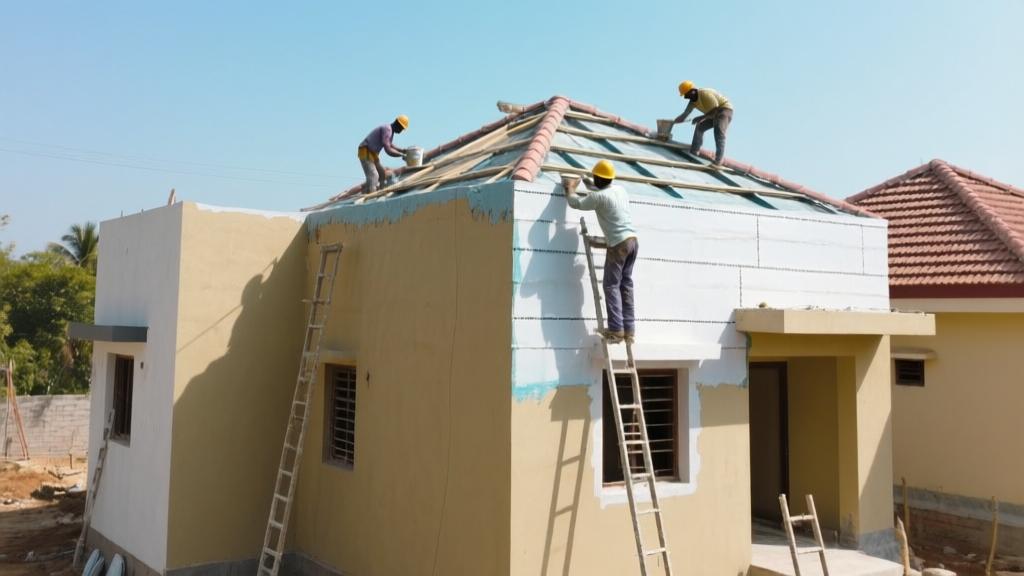
Water leaks are one of the most common problems faced by Indian homeowners, especially during the monsoon months when rainfall can exceed 1000 mm in many regions. When water finds a path through walls, roofs or floors it can cause plaster damage, rusting of steel, mould growth and even structural weakening. A well planned waterproofing system creates a continuous barrier that stops water ingress and protects the building envelope for years. This guide explains the most widely used waterproofing methods in India, when each method is appropriate, how to apply them correctly and how to keep them performing over time.
Why and When to Waterproof Your Home
India experiences a wide range of climatic conditions, from heavy coastal rains to extreme humidity in inland cities. In such environments the building envelope is constantly exposed to moisture, and even small defects can turn into major leaks over time. Waterproofing is not a luxury but a preventive measure that safeguards health, reduces repair costs and maintains property value. Without a proper barrier, water can travel through capillary action and reach interior finishes, leading to costly renovations.
Typical signs that a structure needs waterproofing include damp patches on walls, peeling paint, salty efflorescence on plaster, persistent mould in bathrooms and a musty smell in basements. In roofed areas you may notice water stains or rust on steel trusses after a heavy downpour. Early detection of these symptoms allows homeowners to intervene before the damage spreads to load bearing elements.
For new construction the ideal time to apply waterproofing is during the plastering stage, before the final coat of paint, because the substrate is clean and moisture content is low. In existing buildings the best window is the dry season, usually between November and February, when relative humidity is lower and curing of coatings is faster. A periodic inspection every two years is recommended for homes in high rainfall zones, while a five year check may be sufficient in drier regions.
Understanding structural cracks helps you identify underlying waterproofing failures. Our detailed guide explains common crack patterns and repair methods. Related: Understanding Structural Cracks
Overview of Major Waterproofing Technologies
Cementitious waterproofing is a blend of Portland cement, fine sand, polymer or acrylic additives and a waterproofing agent. The mixture forms a rigid, monolithic membrane that adheres well to concrete, brick and masonry surfaces. It is most suitable for areas that are not subject to constant movement, such as flat roofs, terraces and basement walls. The material is easy to apply with a trowel or brush and typically cures within 24 to 48 hours under normal Indian weather conditions.
Bituminous waterproofing uses a sheet or liquid form of modified bitumen, which is a petroleum based membrane with added polymers for flexibility. The sheet type comes in rolls that are torch-applied or self-adhesive, while the liquid form is applied with a roller or brush and then cured to form a seamless film. Bituminous membranes are highly resistant to water pressure and are popular for low slope roofs and balcony decks. However they can be sensitive to UV exposure and may require a protective top coat in sunny regions.
Polymer-modified cementitious coatings combine the rigidity of cement with the elasticity of polymers such as styrene-butadiene or acrylics. This hybrid system can accommodate minor substrate movements while maintaining a waterproof seal. It is often used for wet areas like bathrooms, kitchen backsplashes and water tanks where a smooth, non-porous finish is required. The polymer content also improves adhesion on painted or tiled surfaces, reducing the risk of delamination.
Polyurethane waterproofing is a two-component liquid system that cures into a flexible, high-performance film. PU coatings are known for their excellent elongation, chemical resistance and ability to bridge hairline cracks. They are ideal for complex geometries such as roof joints, balcony parapets and underground parking slabs. The drawback is that PU requires careful mixing, a controlled temperature range (usually 10-30°C) and protective equipment because the chemicals can be irritant.
Acrylic waterproofing is a water based coating that forms a thin, elastic membrane after curing. It is lightweight, quick drying (often within 2-3 hours) and can be applied over a variety of substrates including concrete, metal and wood. Acrylics are especially suitable for interior walls and ceilings where breathability is important to avoid trapped moisture. Their main limitation is lower resistance to ponding water, so they are not recommended for flat roofs with no slope.
Each technology has its own strengths and limitations. The following list summarises the key advantages and typical applications. Choosing the right system depends on the location, expected water pressure and budget constraints.
- Cementitious: Rigid, easy to apply, inexpensive; best for roofs, terraces and basements with low movement.
- Bituminous: Highly water resistant, good for low slope roofs; requires torch or protective coating.
- Polymer-modified cementitious: Flexible, bonds to painted surfaces, suitable for wet areas; slightly higher cost.
- Polyurethane (PU): Very elastic, bridges cracks, excellent chemical resistance; needs skilled labour and safety gear.
- Acrylic: Fast drying, breathable, ideal for interior walls; not suitable for prolonged ponding.
Choosing the Right System for Different Areas
Roofs are the most exposed part of a house and the choice of waterproofing depends on roof type, slope and exposure to sunlight. For flat or low-slope roofs a cementitious or bituminous membrane provides a robust barrier against ponding water. Sloped roofs, especially those covered with tiles, often benefit from a polymer-modified cementitious coating that can flow into gaps and protect the underlying deck. In coastal areas where salt spray accelerates corrosion, a polyurethane coating with a UV resistant top coat offers long term durability.
Exterior walls face wind driven rain, thermal cycling and sometimes direct splash from gutters. A cementitious coating with a polymer additive is a cost effective solution for brick or concrete walls, while an acrylic coating can be used on painted surfaces to maintain breathability. For high rise or exposed facades that experience structural movement, a flexible PU membrane applied as a liquid film is advisable. Regular inspection of joints and sealants further enhances the wall's resistance to water ingress.
Bathrooms are constantly exposed to water and steam, making them prone to mould and plaster deterioration. The ideal waterproofing system for bathroom floors and walls is a polymer-modified cementitious or a PU coating that creates a seamless, non-porous layer. These systems can be tiled over after curing, providing a durable substrate for ceramic tiles. Acrylic membranes can also be used for interior walls but must be covered with a waterproof tile backer board to avoid water seepage.
Basements are below ground level and face hydrostatic pressure from surrounding soil. Bituminous sheets with a torch-applied method are popular for basement walls because they form a thick, water tight barrier. For those who prefer a liquid system, a cementitious coating reinforced with polymer or a PU membrane can be applied directly to the concrete slab and walls. Proper drainage and a sump pump are essential complements to any waterproofing method in basements.
Area
| Area | Recommended Method | Key Benefits | Approx Cost (Rs./sqm) |
| Flat Roof / Terrace | Cementitious or Bituminous | High water resistance, good for ponding, easy to repair | 80-120 (cementitious) or 70-100 (bituminous) |
| Sloped Roof (Tiles) | Polymer-modified Cementitious | Flexible, adheres to tiles, breathability | 120-180 |
| Exterior Walls | Acrylic or Polymer-modified Cementitious | Breathable, UV stable, easy to apply | 90-130 (acrylic) or 120-180 (polymer) |
| Bathrooms (Floor & Walls) | Polymer-modified Cementitious or PU | Seamless, non-porous, suitable for tiling | 120-180 (polymer) or 150-250 (PU) |
| Basement Walls & Floor | Bituminous Sheet or PU Liquid | Resists hydrostatic pressure, flexible, long life | 70-100 (bituminous) or 150-250 (PU) |
Selecting the right paint complements waterproofing by allowing the wall to breathe while resisting moisture. Paints with high alkali resistance work best on cementitious membranes. Related: Choosing the Right Paint for Indian Climate
Step-by-Step Application Process for Each Method
Applying waterproofing correctly is as important as selecting the right material. The following outlines the typical sequence of steps for each of the major systems. Always follow the manufacturer's technical data sheet for specific mixing ratios, curing times and safety precautions.
- Cementitious Waterproofing
- Clean the surface by removing dust, loose paint, oil stains and any previous failed coating.
- Repair cracks and holes with a cement-sand mortar and allow it to cure for at least 24 hours.
- Apply a primer if recommended by the product; this improves adhesion on smooth substrates.
- Mix the cementitious waterproofing material according to the instructions, usually a 1:1 ratio of powder to water.
- Apply the first coat with a trowel or brush, achieving a uniform thickness of 2-3 mm; allow it to set for 6-8 hours.
- Apply a second coat at right angles to the first, ensuring complete coverage of joints and corners; cure for 24 hours before exposing to water.
- Bituminous Sheet Waterproofing
- Prepare the substrate by cleaning, leveling and ensuring it is dry (moisture content below 5%).
- Apply a primer or bitumen tack coat to the surface to enhance sheet adhesion.
- Unroll the bituminous sheet, overlapping adjacent strips by at least 75 mm and aligning with roof joints.
- Use a propane torch to heat the underside of the sheet, causing the bitumen to melt and bond to the primer.
- Press the sheet firmly with a roller to remove air bubbles and ensure full contact.
- Seal all edges, terminations and penetrations with bitumen sealant or torch-applied flashing.
- Apply a protective coating (e.g., acrylic top coat) if the roof is exposed to direct sunlight.
- Polymer-Modified Cementitious Coating
- Clean and repair the substrate as described for cementitious waterproofing.
- Apply a bonding primer if the surface is glossy or previously painted.
- Mix the polymer-modified coating with water according to the label, usually a 1:0.5 to 1:1 ratio.
- Use a roller or brush to apply the first coat at a thickness of 1-2 mm; allow it to tack up for 2-3 hours.
- Apply a second coat orthogonal to the first, building up to a total thickness of 3-4 mm.
- Inspect for pinholes and touch up any missed spots before the final cure.
- Cure time is typically 24-48 hours before water exposure.
- Polyurethane (PU) Liquid Waterproofing
- Ensure ambient temperature is between 10-30°C and relative humidity is below 80%.
- Clean, dry and degrease the surface; any moisture will affect adhesion.
- Mix the two components (resin and hardener) in the exact ratio specified, usually 1:1 by volume.
- Stir the mixture gently for 2-3 minutes to avoid air entrapment.
- Apply the PU coating with a roller or spray gun, achieving a wet film thickness of 0.7-1 mm per pass.
- Apply multiple passes, overlapping each pass by 50%, until the required dry film thickness (typically 1.5-2 mm) is reached.
- Allow the coating to cure for 24-36 hours before subjecting it to water or foot traffic.
- Acrylic Waterproofing
- Prepare the surface by cleaning, removing efflorescence and repairing cracks.
- Apply a primer if the substrate is highly porous or previously coated with oil based paint.
- Mix the acrylic coating with water if required (some products are ready-to-use).
- Apply the first coat with a roller, achieving a film thickness of 0.5-1 mm; it will dry within 2-3 hours.
- Apply a second coat after the first is dry, ensuring full coverage of joints and corners.
- For interior walls, a breathable finish is achieved by using a low VOC acrylic formulation.
- Typical cure time before painting or tiling is 24 hours.
Surface Preparation and Safety Measures
Surface preparation is the foundation of a successful waterproofing job. Any contaminant such as dust, oil, loose paint or old coating can prevent adhesion and lead to premature failure. Start by sweeping the area, then wash with a mild detergent solution and rinse thoroughly. For concrete surfaces, perform a moisture test by taping a plastic sheet for 24 hours; if condensation appears, the substrate is still damp and must be dried before coating.
All cracks, spalls and voids should be filled with a compatible repair mortar before applying any waterproofing material. Use a cement-sand mix for cementitious systems and an epoxy filler for PU applications, as epoxy provides better bonding to cured PU. After repairs, allow the filler to cure completely and sand the area smooth to achieve a uniform surface. A primer improves bonding especially on smooth or painted substrates and also reduces the absorption rate of the waterproofing layer.
Many waterproofing chemicals emit volatile organic compounds (VOCs) and can irritate skin and eyes. Wear protective gloves, goggles, a face mask and a full-sleeve coverall when handling bitumen, PU or polymer resins. Ensure adequate ventilation in enclosed spaces such as basements and bathrooms. For torch-applied bituminous sheets, keep a fire extinguisher nearby and avoid using the torch near flammable materials.
Maintenance, Inspection and Repair
Even the best waterproofing system requires periodic inspection to catch early signs of wear. For roofs, inspect after each monsoon season for ponding water, cracked joints or blistering of the coating. Walls should be checked for new efflorescence, water stains or mould growth at least twice a year. Basements benefit from a visual check of the interior and exterior walls, as well as monitoring the operation of sump pumps.
Regular cleaning helps prolong the life of the waterproofing membrane. Remove debris, leaves and algae from roofs using a soft brush and mild detergent; avoid high pressure washing which can damage thin membranes. For interior walls, wipe away mould with a solution of water and mild bleach, then allow the surface to dry completely before applying a fresh coat of acrylic or polymer sealant.
Small cracks or pinholes can be repaired without stripping the entire coating. For cementitious systems, apply a thin layer of the same material over the defect and feather the edges. For PU or polymer membranes, use a compatible repair kit that contains a flexible filler and a top coat; the repaired area should be cured as per the product instructions before exposing it to water. Prompt repair prevents water from seeping behind the membrane and causing hidden damage.
Most waterproofing membranes retain their performance for 5-10 years depending on exposure and maintenance. A re-coating schedule of every 8 years for cementitious and bituminous systems, and every 5 years for PU and polymer systems, is a good rule of thumb for Indian climates. During re-coating, the existing layer can often be lightly sanded and a new coat applied directly, saving time and cost.
Common Mistakes and How to Avoid Them
Even experienced contractors can make errors that compromise the waterproofing system