
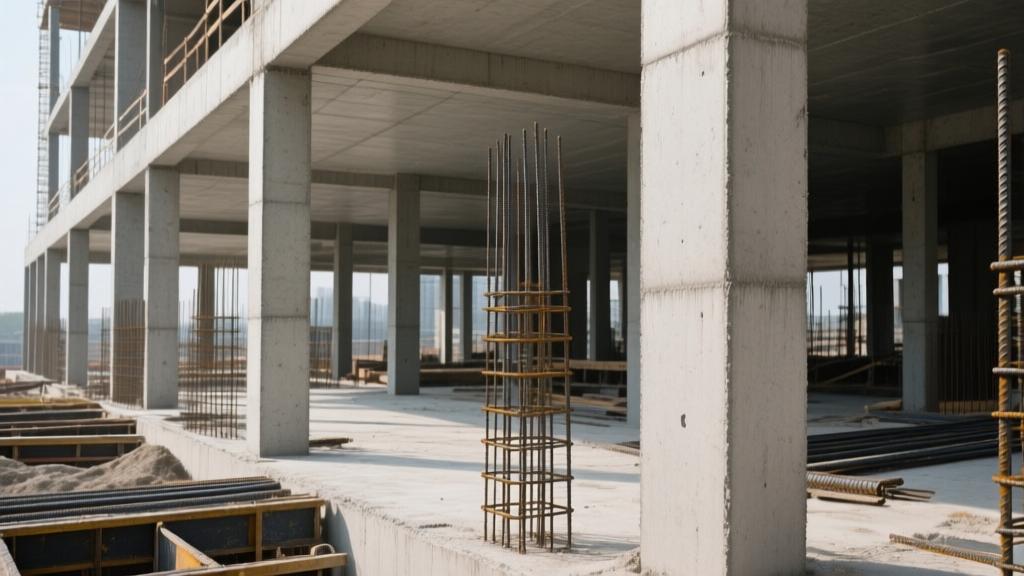
RCC Ka Full Form Aur Parichay
RCC ka full form Reinforced Cement Concrete hai. Yeh ek aisa construction material hai jisme cement, sand, aggregate aur steel reinforcement ko ek saath mix kiya jata hai. Indian residential construction me RCC ka upyog sabse adhik hota hai kyunki yeh majbooti, sthirata aur aakarshak finish dono pradan karta hai. Is blog me hum RCC ke mool tatvon, steel reinforcement ke karan, nirman prakriya, prakar, labh aur ghar nirman me iska mahatva ko vistrit roop se samjhayenge.
RCC Kya Hai? Iske Mukhya Tatva
RCC ek composite material hai jisme cement paste (cement + paani + sand) aur steel bars (rebars) ko ek saath joda jata hai. Cement paste concrete ko bind karta hai aur steel rebars tensile stress ko sahara dete hain. Concrete khud sirf compressive forces ko bardasht karta hai, jabki steel tensile aur flexural forces ko sambhalta hai. Is prakar ke combination se structure ko dono prakar ke load se surakshit rakha jata hai.
RCC ka istemal typically 20-30 mm dia ke rebars ke sath kiya jata hai, lekin load ke anuroop higher dia ke bars bhi istemal kiye ja sakte hain. Steel bars ko proper spacing aur cover (concrete ke andar ki thickness) dena jaruri hota hai taki corrosion se bachav ho sake. Concrete ki quality, water-cement ratio, aur curing process bhi RCC ki durability ko prabhavit karte hain.
Steel Reinforcement Kyon Istemal Hoti Hai?
Concrete sirf compressive loads ko achhi tarah se sambhal sakta hai, lekin jab building par bending, shear ya tension aati hai to concrete crack kar sakta hai. Steel reinforcement is weakness ko door karta hai. Steel ki tensile strength bahut adhik hoti hai, isliye jab concrete crack hota hai to steel load ko carry karta hai aur structure ko collapse hone se bachata hai.
Steel ka thermal expansion coefficient concrete ke barabar hota hai, isliye temperature change ke dauran dono ek saath expand ya contract karte hain, jo ki structure ke stress ko kam karta hai. Saath hi, steel ka ductility (lamba khichne ki shamta) hoti hai, jo earthquake ya sudden impact ke samay structure ko energy dissipate karne me madad karta hai.
RCC Ka Nirman Prakriya - Kadam Dar Kadam
RCC ke construction me kai important steps hote hain. Neeche diye gaye steps ko dhyan se follow karne se aapke ghar ki buniyadi imarat majboot aur lambi umar wali hogi.
- Design aur Detailing: Structural engineer se design aur bar schedule (rebars ki size, spacing, cover) taiyar karwaye.
- Formwork (Moulding): Concrete ko shape dene ke liye wooden ya steel formwork lagaye. Formwork ki accuracy slab, beam ya column ke dimensions par nirbhar karti hai.
- Rebar Cutting aur Bending: Schedule ke anuroop rebars ko cut aur bend kare. Bending ke baad steel ko proper chairs ya spacers par rakh kar required cover banaye.
- Rebar Placement: Rebars ko formwork ke andar set kare, ensure kare ki sabhi bars ek dusre se cross tie ya hook se jure hon aur cover 20-25 mm ke beech ho.
- Concrete Mixing: Ready mix concrete ya site mix ka upyog kare. Typical mix ratio M25 (1:1:2) ya M20 (1:1.5:3) hota hai, jo ki design ke anuroop hota hai.
- Concrete Pouring: Concrete ko dhire dhire formwork me daale aur vibrator se compact kare taki air bubbles nikal jaye. Pouring ko ek saath, continuous flow me karna chahiye.
- Curing: Concrete ko kam se kam 7 din tak water curing ya curing compound se moist rakhe. Proper curing se strength gain badhta hai.
- Formwork Removal: Curing ke baad formwork ko dhyan se hataye, ensure kare ki concrete surface damage na ho.
- Finishing: Surface ko trowel ya polish karke smooth finish de. Yeh aage ki plastering ya flooring ke liye base banata hai.
In steps ko dhyan se follow karne par aap ek strong RCC structure prapt kar sakte hain jo lambe samay tak safe rahega.
RCC Ke Prakar - Ghar Nirman Me Upyog Hone Wale Structure
RCC alag alag structural elements me upyog hota hai. Har ek element ki apni design requirements hoti hain. Neeche kuch mukhya RCC elements ki list di gayi hai:
- Slab: Ghar ke floor ya roof ke roop me istemal hota hai. Typically 120-150 mm thickness ka hota hai.
- Beam: Slab ko support dene ke liye horizontal members. Width 200-300 mm aur depth 400-600 mm tak ho sakta hai.
- Column: Vertical load bearing members. Size 200x200 mm se le kar 400x400 mm tak hota hai.
- Footing (Isolated ya Combined): Foundation ke roop me ground level par rakha jata hai. Concrete ki depth 500 mm se adhik ho sakti hai.
- Wall (RCC Wall): Load bearing ya non-load bearing walls, jo ki brick ya block ke sath bhi banayi ja sakti hain.
Har element ke liye reinforcement detailing alag hoti hai, jo ki structural engineer ke design drawing me clearly mention hoti hai. Yeh details ensure karti hain ki har element apni maximum capacity tak load ko safely bear kar sake.
RCC vs Plain Concrete - Tulnatmak Table
| Parameter | RCC (Reinforced Cement Concrete) | Plain Concrete |
|---|---|---|
| Load Bearing Capability | High - tension, compression, shear sabhi ko handle karta hai | Sirf compression, tension ke liye kamjor |
| Durability | Corrosion resistant jab tak proper cover rahe | Cracking aur water penetration ki sambhavna adhik |
| Typical Use | Slabs, beams, columns, footings, walls | Pavement, non-structural fills |
| Cost Per Cubic Meter (2026) | Rs. 6500 - 7500 | Rs. 3500 - 4500 |
| Construction Complexity | Higher - reinforcement placement & curing care | Simple - formwork aur pouring hi kaafi |
Upar diye gaye table se aap dekh sakte hain ki RCC ka upyog thoda mehenga aur complex hai, lekin iska long term benefit aur safety bahut adhik hota hai.
RCC Ke Labh - Kyu Har Ghar Me Iska Upyog Hota Hai
RCC ke kai mahatvapurn labh hain jo ise residential construction me pradhan banate hain:
- Majbooti: Concrete ka compressive strength aur steel ka tensile strength milkar ek balanced structure banata hai.
- Earthquake Resistance: Steel ki ductility se structure vibrations ko absorb karta hai, jo bhukamp ke samay bahut zaroori hota hai.
- Fire Resistance: Concrete fire ko rokti hai aur steel ko high temperature me bhi structurally stable rakhti hai.
- Low Maintenance: Proper cover aur quality concrete se corrosion kam hota hai, isliye maintenance cost kam aati hai.
- Design Flexibility: RCC ke saath arches, cantilevers, aur complex geometries bhi banayi ja sakti hain.
In labhon ke karan hi aaj ke modern Indian ghar me RCC ko default material mana jata hai. Yeh aapke investment ko surakshit aur long term value deta hai.
Ghar Nirman Me RCC Ka Mahatva
Ghar ke foundation se le kar roof tak RCC ka upyog hota hai. Foundation me isolated footings ya raft foundation RCC se banaya jata hai, jo ki soil pressure aur building load ko evenly distribute karta hai. Floor slab RCC ka use hota hai, jo ki interior aur exterior space ko strong aur level banaata hai. Roof slab bhi RCC ka hi hota hai, jo ki water proofing aur load bearing dono ka dhyan rakhta hai.
RCC ke bina ghar ki structural integrity compromised ho sakti hai. Agar aap sirf plain concrete ya brick masonry par nirbhar karte hain, to aapko future me cracks, settlement aur water seepage jaise problems face karni pad sakti hain. Isliye har ek structural element ke liye RCC ka istemal karna aapke ghar ke liye ek surakshit investment hai.
RCC Ki Lagat Aur Budgeting - Real Price Range
RCC ki cost ko samajhna har homeowner ke liye zaroori hai. 2026 ke market me approximate price range kuch is prakar hai:
- Cement (50 kg bag) - Rs. 300 - 350
- Steel (1 kg) - Rs. 55 - 60 (TMT bar)
- Aggregate (per tonne) - Rs. 1300 - 1500
- Sand (per cubic meter) - Rs. 500 - 600
- RCC per cubic meter (including material + labor) - Rs. 6500 - 7500
Udaharan ke liye, 100 sq ft (9.29 sqm) ke floor slab ko 150 mm thickness me banane ke liye lagbhag 1.1 cubic meter RCC ki avashyakta hoti hai. Iske liye total cost Rs. 7200 - 8300 aayegi. Isme formwork, reinforcement aur curing ke liye extra Rs. 1000 - 1500 ki labor cost bhi shamil hoti hai.
Budget banate waqt aapko contingency (10-15%) rakhni chahiye taki material price fluctuation ya unexpected site conditions ko handle kiya ja sake. Yeh aapko project ke time pe financial stress se bachata hai.
RCC Me Dhyan Dene Yogya Mukhya Points
RCC ki quality aur safety ko ensure karne ke liye kuch essential points ko hamesha dhyan me rakhe:
- Proper Cover: Rebar ke charo taraf kam se kam 20 mm ka concrete cover rakhe, taki corrosion se bacha ja sake.
- Accurate Mixing Ratio: Design ke anuroop water-cement ratio (0.45 - 0.55) maintain kare taki strength achieve ho.
- Vibration: Concrete ko pour karte waqt vibrator se properly compact kare, air pockets hataane ke liye.
- Curing: Minimum 7 din tak water curing kare, ya curing compound ka upyog kare.
- Quality Materials: Certified cement, clean sand, well-graded aggregate aur TMT steel ka upyog kare.
- Inspection: Reinforcement placement aur concrete pour ke baad site supervisor ya engineer ki inspection zaroori hai.
In guidelines ko follow karne se aapke RCC structure ki life expectancy aur load bearing capacity dono hi improve hoti hain.
RCC Se Judi Aam Prashn (FAQ)
Q1: RCC slab ki thickness kitni honi chahiye? Aam tor par residential slab ki thickness 120-150 mm rakhi jati hai, lekin high load ya large span ke liye engineer se design confirm karwaye.
Q2: Kya main khud se RCC ka mix bana sakta hoon? Agar aapko mix design aur material quality ka proper knowledge hai to aap site mix kar sakte hain, lekin reliable results ke liye ready mix concrete ka upyog adhik suvidha janak hota hai.
Q3: Reinforcement ka spacing kitna hona chahiye? General practice me 150 mm se 200 mm ke beech spacing rakha jata hai, lekin design drawing me specified spacing ko follow karna anivarya hai.
Q4: RCC ka fire rating kya hota hai? Properly cured RCC 1-2 ghante tak fire resistance pradan karta hai, lekin additional fireproof coating se safety aur badhayi ja sakti hai.
Q5: RCC me cracks aane par kya karna chahiye? Minor shrinkage cracks ko epoxy injection ya surface plaster se seal kiya ja sakta hai. Agar cracks bade ho to structural engineer se assessment karwaye.
RCC Ka Future - 2026 Me Naye Trends
2026 me RCC ki construction me kuch nayi technology aur trends ubhar kar aayi hain. Fibre reinforced concrete (FRC) me steel fibers ko mix me add kiya jata hai, jisse tensile strength aur crack resistance improve hoti hai. Self-compacting concrete (SCC) ki upyogita se vibration ki avashyakta kam ho jati hai, jo ki high rise building me productivity badhata hai.
Saath hi, eco-friendly binders jaise fly ash ya slag cement ka upyog bhi badh raha hai, jo ki cement consumption ko 30% tak kam kar sakta hai aur carbon footprint ko reduce karta hai. Yeh sab trends aapke ghar ke RCC ko sustainable aur cost-effective banane me madad karenge.
RCC Ke Liye Sahi Contractor Ka Chunav Kaise Kare?
Ek achha contractor aapke RCC project ki safalta ka mool mantra hota hai. Contractor chunne se pehle in points ko verify kare:
- Previous projects ke references aur site visits.
- License aur insurance documents ki poori jaankari.
- Material procurement ke supplier network ki reliability.
- Workforce ki skill level aur training ki details.
- Transparent costing aur payment schedule.
Ek reputable contractor aapke design specifications ko sahi tarah se implement karega aur quality control processes ko majbooti se follow karega. Yeh aapke ghar ki safety aur long term performance ko guarantee karta hai.
RCC Aur Ghar Ka Budget - Kaise Plan Kare?
RCC ke liye budget banate samay aapko material cost, labor cost, formwork, reinforcement, aur contingency ko include karna chahiye. Typical residential RCC cost per square foot lagbhag Rs. 150 - 170 hota hai, jo ki slab, beam, column aur finishing ke liye inclusive hota hai. Agar aap high grade material ya special finishes chahte hain, to cost Rs. 200 - 250 per sq ft tak ja sakti hai.
Pehle se hi ek detailed estimate banane se aap cost overruns se bach sakte hain. Estimate me local market price fluctuations ko dhyan me rakhte hue 5-10% buffer rakhe. Agar aap phased construction (jaise first floor, second floor) kar rahe hain, to har phase ke liye alag se budgeting kare.
RCC Ki Quality Assurance - Testing Methods
RCC ki quality ko verify karne ke liye kuch standard tests ki jaati hain:
- Compressive Strength Test: 28 din ke cured concrete cubes ko crush karke strength (MPa) measure ki jati hai.
- Slump Test: Fresh concrete ki workability check karne ke liye slump cone ka upyog hota hai.
- Rebar Tensile Test: Steel bars ki tensile strength aur elongation check ki jati hai.
- Cover Measurement: Rebar ke upar concrete cover ko gauge se measure kiya jata hai.
Yeh tests aapke RCC structure ki durability aur load bearing capacity ko ensure karte hain. Construction ke dauran regular testing schedule ko follow karna har homeowner ke liye beneficial hota hai.
RCC Ka Maintenance - Lambe Samay Tak Suraksha
RCC generally low maintenance hota hai, lekin kuch simple steps se aap iski life ko extend kar sakte hain. Regularly water seepage ya cracks ko check kare aur early stage me repair kare. Paint ya waterproof coating se surface ko moisture se protect kare.
Concrete ke surface par heavy loads ya impact se bachav ke liye protective mats ya tiles ka upyog kare. Agar aapke area me saline water ya high humidity hai, to extra cover aur corrosion resistant steel (like epoxy coated bars) ka istemal kare. Yeh sab practices aapke RCC ko hamesha majboot rakhenge.
RCC Se Judi Kuch Important Safety Tips
Construction site par safety sabse pehle aati hai. RCC work ke dauran in safety measures ko follow kare:
- Hard hats, safety shoes, gloves aur eye protection ka upyog kare.
- Formwork ko proper bracing ke sath set kare taki collapse na ho.
- Rebars ko handle karte samay proper lifting equipment ka upyog kare.
- Concrete pour ke dauran site ko barricade kare taki unauthorized entry na ho.
- Mixing aur pouring ke dauran proper ventilation aur dust control maintain kare.
In basic safety steps ko follow karne se aapke workers ki suraksha aur project ki timely completion dono hi sunischit hote hain.
RCC Ka Future Outlook - Smart Construction
2026 me digital tools jaise BIM (Building Information Modelling) aur 3D printing ke integration se RCC design aur execution me efficiency badh rahi hai. BIM se reinforcement detailing, clash detection aur material estimation accurate hoti hai, jo ki waste ko kam karta hai. 3D printed formwork se complex shapes ko kam samay me banaya ja sakta hai.
Smart sensors jo ki concrete curing temperature aur humidity monitor karte hain, unka upyog se optimal curing conditions maintain hoti hain. Yeh sab innovations aapke ghar ke RCC ko high quality aur future proof banate hain.
निष्कर्ष - RCC Ka Mahatva Samjhe Aur Apne Ghar Ko Majboot Banaye
RCC, ya Reinforced Cement Concrete, aaj ke Indian residential construction ka backbone hai. Iska full form, material composition, steel reinforcement ki avashyakta, construction process, prakar, labh aur budgeting sabhi aspects ko samajhkar aap apne ghar ki safety aur longevity ko ensure kar sakte hain. Sahi design, quality material, proper execution aur regular maintenance se aapka RCC structure har samay mazboot aur reliable rahega.
RCC ko chunna sirf ek construction decision nahi, balki aapke parivar ke liye ek surakshit bhavishya ki guarantee hai. Aapke sapno ka ghar aaj ki planning aur sahi RCC implementation se kal ke liye ek mazboot aadhar ban jayega.
संबंधित: RCC vs Plain Concrete
संबंधित: Ghar Ki Buniyaadi Design
संबंधित: Construction Budget Planning