
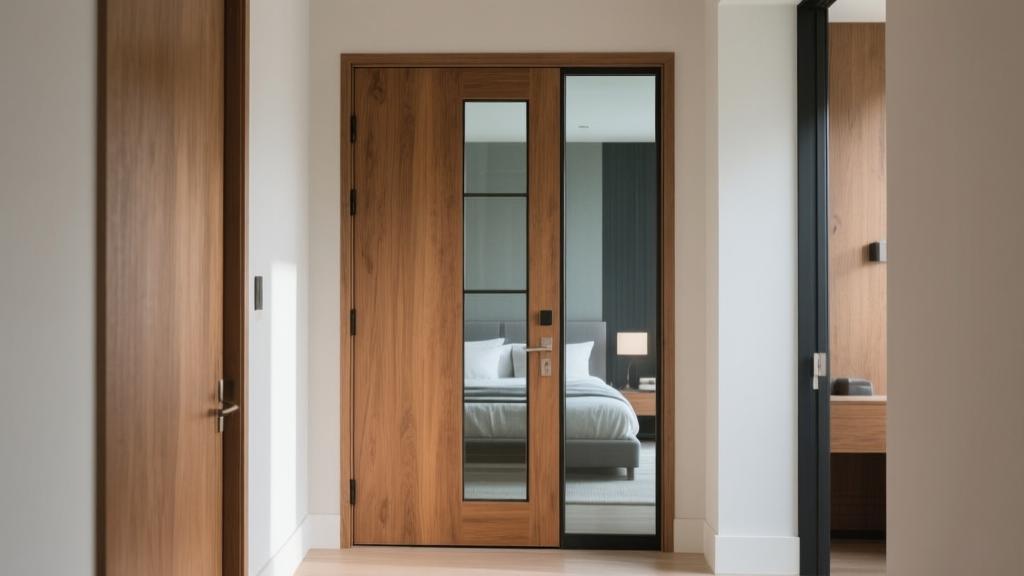
Why Door Selection Matters in an Indian Home
Doors are the first point of contact between the interior and exterior of a house, and they play a vital role in security, privacy, energy efficiency and visual appeal. In the Indian climate, doors must cope with high humidity, monsoon rains and large temperature variations, which makes the choice of material and finish critical. A well-chosen door can reduce noise from busy streets, keep out dust and insects, and even contribute to a cooler indoor environment. Therefore, selecting the right door type for each room is a decision that impacts comfort, safety and resale value.
Related guides: How to Choose Door Hardware | Best uPVC Window and Door Brands | Bathroom Fittings Guide
Key Materials and Their Characteristics
Understanding the strengths and limitations of each door material helps you match it to the specific demands of different rooms. Below is a concise overview of the most common materials used in Indian homes.
| Material | Typical Cost (Rs.) per Door | Strength & Security | Moisture Resistance | Maintenance |
|---|---|---|---|---|
| Solid Wood (Teak, Sheesham) | 8,000-25,000 | High (can be reinforced with steel core) | Good if properly sealed; prone to swelling in high humidity | Periodic polishing, oiling |
| MDF (Medium Density Fibreboard) | 5,000-12,000 | Moderate (requires metal studs for security) | Low; absorbs moisture, may swell | Easy to paint; avoid water splashes |
| uPVC (Unplasticised Polyvinyl Chloride) | 6,000-15,000 | Good (strong hollow core) | Excellent; does not rot or rust | Wipe with mild detergent; no polishing needed |
| Steel (galvanised or stainless) | 10,000-30,000 | Very High (resists forced entry) | Excellent; rust-free if stainless or properly coated | Inspect for dents; repaint if scratched |
| Tempered Glass | 12,000-35,000 | Variable (depends on frame) | Excellent; does not absorb water | Clean with glass cleaner; avoid impact |
Tip: For exterior doors, combine a solid wood or steel core with a uPVC or glass overlay to achieve both aesthetics and durability.
Common Door Styles and Their Best Uses
Door style determines how a door fits into the overall interior design and how much space it occupies. The following table matches popular styles with their functional traits.
| Style | Space Requirement | Ventilation | Aesthetic Appeal | Typical Applications |
|---|---|---|---|---|
| Flush | Minimal (opens like a panel) | None | Sleek, modern | Bedrooms, bathrooms, interior partitions |
| Panel | Standard swing space | None | Classic, can be carved | Entrance, living room, bedrooms |
| French | Requires clearance on both sides | Partial (glass panes) | Elegant, airy | Living rooms, master bedrooms, balconies |
| Sliding | Uses wall track, no swing space | None (unless glass) | Contemporary, space-saving | Balcony, closets, kitchens |
| Folding (Bi-fold) | Uses wall space for panels | None | Functional, modern | Wardrobes, pantry doors, large partitions |
When space is limited, sliding or folding doors provide the most flexibility, while French doors are ideal for rooms where a sense of openness is desired.
Entrance Doors (Main Door)
The main door is the most visible element of a home and must balance security, curb appeal and durability. In Indian cities, where street traffic and occasional break-ins are common, a reinforced steel core or a solid wood door with a steel frame is advisable.
Recommended Materials: Solid wood with steel reinforcement, steel doors with powder-coat finish, or uPVC doors with a steel core and decorative glass inserts. These options offer strength while allowing design flexibility.
Best Styles: Panel doors with raised mouldings for a traditional look, or flush doors with frosted glass for a modern vibe. French doors can be used for a grand entrance but require a wider opening.
Typical price range for a good quality main door is Rs. 12,000-35,000, depending on material, size and hardware. Look for multi-point locking systems, anti-drill plates and reinforced hinges to enhance security.
Bedroom Doors
Bedroom doors need to provide privacy, sound insulation and a pleasant aesthetic that matches personal taste. Sound transmission is a common concern in densely populated areas, so a solid core door is preferable.
Recommended Materials: Solid wood or engineered wood (MDF with a veneer) for a warm look, or uPVC doors with a solid core for budget-friendly sound dampening. Steel doors are also an option for high security but may feel cold without a wooden veneer.
Best Styles: Flush doors for a minimalist bedroom, panel doors with subtle carvings for a classic feel, or French doors with glass panels to let in natural light while maintaining privacy.
Pricing typically falls between Rs. 8,000 and 20,000 per door. Adding a rubber gasket around the frame can improve acoustic performance without a large extra cost.
Bathroom Doors
Bathrooms are high-moisture environments, so doors must resist water damage, swelling and corrosion. The hardware, especially hinges and locks, should be stainless steel or brass to avoid rust.
Recommended Materials: uPVC doors with a solid core are the most moisture-resistant and lightweight. Steel doors with a powder-coat finish and stainless steel hardware are also suitable for larger bathrooms.
Best Styles: Flush or panel doors without glass panes to prevent water splash. Sliding doors are an excellent space-saving option for compact bathrooms.
Expect to spend Rs. 5,000-15,000 for a standard bathroom door. Ensure the door is properly sealed at the bottom to stop water from seeping underneath.
Kitchen Doors
Kitchens demand doors that can withstand heat, splatters and frequent cleaning. A fire-rated door is advisable if the kitchen is adjacent to living spaces.
Recommended Materials: Steel doors with a heat-resistant coating, or uPVC doors with a stainless steel core. Wood doors can be used if they are laminated with high-pressure laminate (HPL) that resists moisture.
Best Styles: Flush doors with a smooth finish for easy cleaning, or sliding doors that hide pantry storage without consuming floor space.
Budget-friendly options start at Rs. 6,000, while premium steel or laminated wood doors can go up to Rs. 25,000. Choose hardware with a corrosion-resistant finish to prolong life.
Closet and Wardrobe Doors
Closets often have limited clearance, making space-saving designs essential. Sliding or bi-fold doors are popular because they eliminate the swing arc required by conventional doors.
Recommended Materials: MDF with a high-gloss veneer for a sleek look, solid wood for a premium feel, or uPVC for low maintenance. Mirrors can be added to sliding doors to enhance perceived space.
Best Styles: Sliding doors with concealed tracks, bi-fold doors that fold neatly against the wall, or flush doors with integrated handles for a seamless appearance.
Price ranges from Rs. 4,000 for a basic MDF sliding door to Rs. 18,000 for a custom wood wardrobe with decorative panels. Ensure the track system is robust to support heavy doors.
Balcony Doors
Balcony doors connect indoor living spaces with outdoor areas and must meet safety standards, especially in high-rise apartments. Large glass panels are common, but they need to be tempered and properly framed.
Recommended Materials: Aluminium or uPVC frames with tempered glass inserts. Steel frames are also used for added strength, especially for balconies that serve as fire exits.
Best Styles: Sliding glass doors for a wide opening, or folding doors that stack neatly to one side. French doors with glass panels can provide a classic look while retaining safety.
Expect to spend Rs. 15,000-40,000 depending on glass thickness, frame material and hardware. Look for multi-point locking mechanisms and tempered safety glass to meet Indian building codes.
Interior Partition Doors
Interior partitions create flexible spaces such as home offices, study rooms or play areas. The choice of door here influences both the visual flow and the acoustic separation.
Recommended Materials: MDF with acoustic backing, solid wood for a warm ambience, or glass for a modern, open feel. Steel frames can be used for high-traffic partitions.
Best Styles: Sliding doors for rooms that need to be opened fully, flush doors for a minimalist look, or panel doors with decorative glass inserts for a blend of privacy and light.
Pricing varies from Rs. 5,000 for a simple MDF sliding door to Rs. 22,000 for a custom glass partition with aluminium framing. Consider adding weather-stripping to improve sound insulation.
Buying Checklist - What to Verify Before Purchase
- Accurate measurement of door height, width and thickness, including allowance for frame and clearances.
- Material suitability for the specific room's moisture, heat and security requirements.
- Style compatibility with the available space and interior design theme.
- Security features such as multi-point locks, anti-drill plates and reinforced hinges.
- Sound insulation rating, especially for bedrooms and home offices.
- Moisture resistance and corrosion-proof hardware for bathrooms and kitchens.
- Finish durability - choose powder-coat, lacquer or veneer that can be easily refreshed.
- Maintenance requirements - frequency of polishing, painting or cleaning.
- Warranty period and after-sales service from the supplier.
- Budget alignment - include costs for hardware, installation and any required civil work.
Installation Tips and Maintenance Best Practices
Professional installation ensures that the door operates smoothly and maintains its structural integrity. Always use stainless steel or brass hinges in wet areas to prevent rust. For wooden doors, apply a protective coat of varnish or oil every 12-18 months to guard against humidity.
uPVC and steel doors require only periodic cleaning with a mild detergent and a soft cloth. Avoid abrasive cleaners that can damage the surface finish. Inspect the sealing strips annually and replace them if they show wear, as this helps maintain thermal and acoustic performance.
When installing sliding or folding doors, verify that the track is level and free of debris. Lubricate rollers with a silicone spray to ensure quiet operation. For glass doors, use a non-abrasive glass cleaner and avoid sudden temperature changes that could cause stress cracks.
Conclusion - Making an Informed Door Choice
Choosing the right door for each room involves balancing aesthetics, security, durability and budget. By understanding the properties of wood, MDF, uPVC, steel and glass, and matching them with appropriate styles such as flush, panel, French, sliding or folding, homeowners can create a harmonious living environment that stands the test of time.
Use the material-style comparison tables and the buying checklist provided in this guide to evaluate options systematically. Whether you are building a new home or renovating an existing one, the right door selection will enhance comfort, reduce maintenance costs and add lasting value to your property.
Related: Door Materials Guide
Related: Home Security Tips