
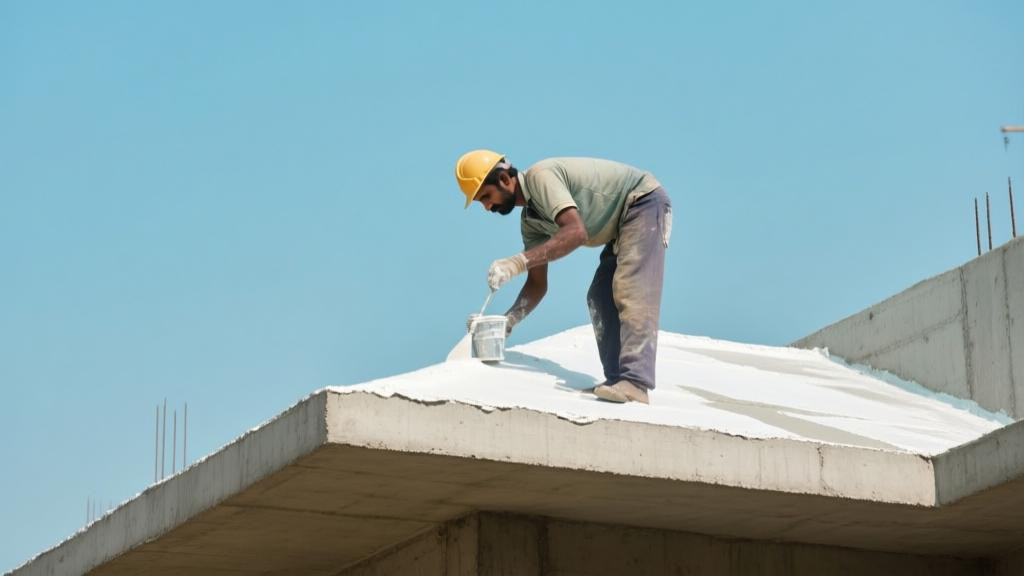
RCC Roof Waterproofing Cost 2026: Methods, Rates and Complete Guide
Introduction
India's monsoon season brings heavy rainfall that can quickly turn a well-constructed RCC roof into a source of leaks, damp patches, and structural damage. The porous nature of reinforced cement concrete, combined with the thermal stresses that arise from daily temperature variations, makes roofs especially vulnerable to water ingress. Homeowners and builders who overlook waterproofing often face costly repairs, reduced property value, and health hazards such as mold and mildew growth. In the context of rising construction material prices in 2026, a proactive approach to roof waterproofing is not just a protective measure-it is a financial safeguard.
Accurately estimating the waterproofing expense is essential for budgeting a new residential project. For accurate overall construction budgeting, see our House Construction Cost Calculator 2026. or retrofitting an existing building. This guide provides a comprehensive overview of the most common waterproofing methods for RCC roofs, detailed cost breakdowns per square foot, and actionable steps to ensure a long-lasting barrier against water. By integrating the latest pricing trends, brand recommendations, and practical tips, Indian homeowners can make informed decisions that align with their budget and performance expectations.
Why RCC Roofs Need Waterproofing
Although RCC is renowned for its compressive strength, the mix's inherent porosity allows water to seep through microscopic pores and capillary channels. During curing, improper water-cement ratios or inadequate vibration can leave voids that later become pathways for moisture. Additionally, hairline cracks develop over time due to shrinkage, thermal expansion, and the cyclic loading of wind and rain. These micro-cracks, often invisible to the naked eye, expand under repeated moisture cycles, compromising the roof's integrity.
Beyond structural concerns, water infiltration on RCC roofs can lead to corrosion of the embedded steel reinforcement. Corroded rebars expand, exerting tensile forces that widen existing cracks and eventually cause spalling of the concrete cover. This deterioration not only shortens the roof's service life but also poses safety risks to occupants. Moreover, persistent dampness encourages the growth of mold and fungi, which can affect indoor air quality and trigger allergic reactions. Therefore, a reliable waterproofing system is indispensable for protecting both the building envelope and the health of its residents.
- Porous nature of concrete allows capillary absorption
- Hairline and micro-cracks from shrinkage and thermal movements
- Thermal expansion and contraction create stress cycles
- Improper curing leads to voids and increased permeability
- Potential corrosion of steel reinforcement under moisture
- Health hazards due to mold and mildew growth
Types of RCC Roof Waterproofing Methods
Cementitious Waterproofing
Cementitious waterproofing systems are a blend of cement, fine sand, polymers, and chemical admixtures that create a rigid, water-tight coating. Leading Indian brands such as Dr. Fixit Cementitious Waterproofing (CWC-100) and Sika TopSeal-150 offer ready-to-mix kits that simplify on-site preparation. These systems are particularly popular for low-slope RCC roofs because they can be applied with a brush or roller without specialized equipment.
The typical application involves cleaning the roof surface, repairing visible cracks with a suitable filler, and then applying a primer to enhance adhesion. The cementitious mix is then spread in two coats, each about 1.5 mm thick, with a curing period of 24-48 hours at ambient temperature. For optimal performance, a final protective layer of a polymer-modified topcoat can be added to improve UV resistance.
Advantages of cementitious waterproofing include its cost-effectiveness, ease of application, and compatibility with most concrete substrates. However, the rigid nature of the coating makes it susceptible to cracking under significant structural movement. In regions with extreme temperature fluctuations, this limitation can reduce the service life to 5-7 years. As of 2026, material costs for a reputable brand range from Rs. 80 to Rs. 110 per square foot, while labor charges typically fall between Rs. 60 and Rs. 80 per square foot.
For homeowners seeking a balance between budget and performance, cementitious waterproofing remains a viable option, especially when combined with regular maintenance. More detailed guidance on selecting the right cementitious product can be found in the Waterproofing Guide for Homeowners. For a broader overview of all waterproofing methods, .
Bituminous Waterproofing (Hot/Cold Applied)
Bituminous waterproofing utilizes modified bitumen sheets or liquid bitumen to create a flexible, water-proof membrane. The hot-applied method involves heating bitumen sheets (often SBS or APP modified) with a torch and then adhering them to the roof surface. Cold-applied systems, such as the self-adhesive sheets from Basco Bitumen Sheet and Fosroc Bitumen, rely on a pressure-sensitive adhesive that eliminates the need for open flames.
Application of hot-applied bitumen requires thorough surface preparation, including the removal of loose debris and the application of a primer to promote adhesion. The heated sheets are then rolled onto the roof, overlapping each joint by at least 100 mm, and finally torch-welded to ensure a seamless seal. Cold-applied sheets are unrolled directly onto a clean, dry surface, with rollers used to press the membrane into place and eliminate air pockets.
Bituminous systems are praised for their excellent water resistance, high tensile strength, and relatively long lifespan of 8-10 years. However, the hot-applied process demands skilled labor and adherence to safety protocols due to the use of open flames. Cold-applied membranes, while safer, may not perform as well under extreme temperature variations. In 2026, material costs for premium bitumen sheets range from Rs. 120 to Rs. 150 per square foot, with labor costs between Rs. 80 and Rs. 110 per square foot for hot-applied installations and slightly lower for cold-applied methods.
Bituminous waterproofing is especially suitable for flat commercial roofs, industrial sheds, and residential rooftops that experience heavy traffic or storage loads, where durability is a priority.
Polyurethane Liquid Membrane
Polyurethane (PU) liquid membranes are two-component systems that cure to form a seamless, elastomeric coating. Brands such as Dr. Fixit PU 300 and Sika PU 1200 dominate the Indian market, offering high-performance solutions for complex roof geometries. These membranes are applied as a liquid, which then reacts to form a flexible film that can accommodate substrate movements without cracking.
The installation process begins with surface preparation and priming, followed by the precise mixing of resin and hardener in the manufacturer's recommended ratio (typically 1:1 by volume). The mixed solution is then applied using a roller, brush, or spray equipment, achieving a uniform thickness of 1.2-1.5 mm per coat. A minimum of two coats is recommended, with a curing period of 12-24 hours under ambient conditions (ideally 20-30 °C). PU membranes also provide excellent chemical resistance, making them suitable for roofs exposed to industrial pollutants.
Key advantages include remarkable flexibility, superior adhesion, and a lifespan of 12-15 years. The primary limitation is cost; PU systems are among the most expensive waterproofing options, with material prices ranging from Rs. 180 to Rs. 250 per square foot. Labor costs are also higher, typically Rs. 100 to Rs. 130 per square foot, due to the need for skilled applicators and controlled environmental conditions during curing.
For projects where roof penetrations, parapet walls, and complex detailing are present, a PU liquid membrane often provides the most reliable protection. Homeowners should also consider the long-term savings associated with reduced maintenance frequency when evaluating the higher upfront cost.
Polymer Modified Bitumen Sheets
Polymer modified bitumen (PMB) sheets combine traditional bitumen with polymer modifiers such as styrene-butadiene-styrene (SBS) or atactic polypropylene (APP) to enhance flexibility and temperature resistance. Leading Indian manufacturers like Basco, Birla, and Fosroc supply PMB sheets in various thicknesses (3 mm, 4 mm, 5 mm) and reinforcement levels (fiberglass or polyester). These sheets are typically installed using a torch-on method, although some self-adhesive variants are available.
The installation sequence starts with cleaning the RCC roof, applying a primer, and then laying the first sheet with a 100 mm overlap. Each subsequent sheet is torch-welded at the seams to create a continuous waterproof membrane. The final step involves sealing all joints, parapet walls, and roof penetrations with a compatible sealant. The torch-on process creates a strong bond, but it requires strict safety measures to prevent fire hazards.
Polymer modified bitumen sheets offer excellent resistance to UV radiation, aging, and temperature extremes, providing a service life of 10-12 years. The material cost for high-quality PMB sheets in 2026 ranges from Rs. 130 to Rs. 160 per square foot, while labor costs are typically Rs. 110 to Rs. 140 per square foot due to the specialized torch-on technique.
These membranes are a preferred choice for commercial buildings, institutional rooftops, and residential flats in regions with high temperature variation, where flexibility and durability are essential.
Crystalline Waterproofing
Crystalline waterproofing works on a chemical principle where active ingredients in the coating react with unhydrated cement particles to form insoluble crystalline structures within the concrete matrix. Brands such as Dr. Fixit Crystalline Waterproofing (CWF-200) and Sika R-Guard provide ready-mix powders that can be incorporated into the concrete during placement or applied as a surface treatment on cured concrete.
When used as an admixture, the crystalline product is added to the concrete mix (for proper mix proportions, refer to our Concrete Mix Ratio Guide). at a dosage of 2-3 kg per cubic meter, creating a waterproofing effect throughout the entire thickness of the slab. As a surface coating, the product is mixed with water to form a slurry, which is then applied in two coats after the roof surface has been primed and any cracks repaired. The coating penetrates the concrete pores and, upon exposure to moisture, continues to generate crystalline growth that seals micro-cracks and capillary pathways.
The primary advantage of crystalline waterproofing is its self-healing capability; new cracks that form after installation are automatically sealed as the crystals continue to grow. This technology offers a long lifespan of 15-20 years, making it one of the most durable solutions available. However, the material cost is relatively high, ranging from Rs. 150 to Rs. 190 per square foot, and the application requires careful mixing and thorough surface preparation. Labor costs are generally Rs. 100 to Rs. 120 per square foot.
Crystalline waterproofing is especially suitable for new construction projects where the waterproofing can be integrated into the concrete mix, as well as for retrofitting critical areas such as balconies, terraces, and parking decks that are prone to water ingress.
PU Foam Waterproofing
Polyurethane foam waterproofing involves spraying a two-component polyurethane mixture that expands rapidly to form a continuous, cellular foam layer. Leading suppliers like Fosroc PU Foam and Basco PU Foam provide kits designed for roof applications, offering both thermal insulation and waterproofing in a single system.
The application process starts with cleaning the roof surface and applying a primer to improve adhesion. The two components (polyol and isocyanate) are mixed on-site using a specialized spray gun, creating a foam that expands up to 30 times its original volume. The foam fills cracks, voids, and surface irregularities, forming a seamless barrier that also provides an R-value of approximately 3-4 per inch of thickness. After spraying, the foam is allowed to cure for 4-6 hours before a protective topcoat (often a cementitious or polymer coating) is applied to shield the foam from UV exposure.
PU foam offers rapid installation, excellent insulation properties, and a lifespan of 12-15 years. The main challenges include the need for trained applicators, the risk of over-expansion causing pressure on the substrate, and higher material costs. In 2026, material prices for PU foam range from Rs. 200 to Rs. 250 per square foot, while labor costs are typically Rs. 120 to Rs. 150 per square foot.
For roofs that require both waterproofing and thermal insulation, especially in hot climates where energy efficiency is a priority, PU foam waterproofing provides a compelling solution.
Cost Comparison Table
| Method | Material Cost (Rs./sq ft) | Labor Cost (Rs./sq ft) | Total Cost (Rs./sq ft) | Lifespan (years) |
|---|---|---|---|---|
| Cementitious Waterproofing | Rs. 90 | Rs. 70 | Rs. 160 | 5-7 |
| Bituminous (Hot Applied) | Rs. 140 | Rs. 110 | Rs. 250 | 8-10 |
| Bituminous (Cold Applied) | Rs. 120 | Rs. 90 | Rs. 210 | 7-9 |
| Polyurethane Liquid Membrane | Rs. 220 | Rs. 130 | Rs. 350 | >|
| Polymer Modified Bitumen Sheets | Rs. 110 | Rs. 80 | Rs. 190 | 10-12 |
| Crystalline Waterproofing | Rs. 150 | Rs. 100 | Rs. 250 | 10-15 |
| PU Foam Waterproofing | Rs. 225 | Rs. 135 | Rs. 360 | 12-15 |
Note: Costs are approximate averages for 2026 and may vary by city, contractor, and roof condition. Always get 2-3 quotes before finalizing.
How to Choose the Right Waterproofing Method
Selecting the right waterproofing method depends on your budget, roof condition, climate, and long-term plans. Here is a quick selection guide:
- Best for Budget: Cementitious waterproofing (Rs. 160/sq ft) is the most affordable option, ideal for new construction or minor leak repairs on flat roofs.
- Best for Long-Term Value: Polyurethane liquid membrane (Rs. 350/sq ft) offers the best balance of durability, flexibility, and lifespan at 12-15 years.
- Best for Large Commercial Roofs: Polymer modified bitumen sheets provide excellent coverage for large areas with consistent quality.
- Best for Heat Insulation: PU foam waterproofing adds thermal insulation along with waterproofing, reducing cooling costs in hot climates.
- Best for New Construction: Crystalline waterproofing can be integrated into the concrete mix during construction, providing permanent protection.
- Best for Complex Roof Details: PU liquid membrane conforms easily to penetrations, parapet walls, and irregular surfaces.
Step-by-Step Application Process
While specific steps vary by method, the general waterproofing application process follows these stages:
- Step 1 - Surface Preparation: Clean the roof thoroughly, removing dust, debris, oil, and loose particles. Repair any visible cracks with a suitable filler or sealant.
- Step 2 - Primer Application: Apply a primer coat to improve adhesion between the concrete surface and the waterproofing material. Allow it to dry completely.
- Step 3 - Main Waterproofing Layer: Apply the chosen waterproofing material in the recommended number of coats. For liquid membranes, apply cross-directional coats for even coverage. For sheet systems, lay and seal overlapping seams carefully.
- Step 4 - Protection Layer: Apply a protective coating or screed over the waterproofing layer to shield it from UV exposure, foot traffic, and mechanical damage.
- Step 5 - Quality Check: Perform a water ponding test (fill the roof with 2-3 cm of water for 24-48 hours) to check for leaks before completing the project.
Common Mistakes That Cause Waterproofing Failure
- Skipping surface preparation: Applying waterproofing over a dirty, damp, or cracked surface is the number one cause of premature failure.
- Insufficient material thickness: Using less material than recommended to save costs results in thin spots that leak within months.
- Ignoring expansion joints: Expansion and contraction joints must be properly sealed with flexible joint sealant before waterproofing.
- Applying in wrong weather: Waterproofing should not be applied during rain, high humidity, or when temperatures are below 10 degrees Celsius.
- Not sealing penetrations: Pipe penetrations, vents, and roof access points are common leak sources if not properly sealed with waterproofing tape or sealant.
- Skipping the protection layer: UV exposure degrades most waterproofing materials. A protective screed or reflective coating extends lifespan significantly.
Maintenance Tips to Extend Waterproofing Life
- Bi-annual inspection: Check the roof before and after the monsoon season for cracks, blistering, or peeling.
- Keep drains clear: Blocked drains cause water pooling, which increases hydrostatic pressure on the waterproofing layer.
- Remove debris regularly: Leaves, branches, and dirt trap moisture against the roof surface, accelerating degradation.
- Repair cracks immediately: Small cracks can be sealed with waterproofing sealant. Ignoring them allows water to penetrate and damage the entire layer.
- Reapply protective coating every 3-5 years: The top protection layer degrades fastest and should be refreshed periodically.
When to Call a Professional vs DIY
For small repairs, patching minor cracks, or applying cementitious waterproofing on a flat, accessible roof, a competent DIYer can handle the job. The key is proper surface preparation and following manufacturer instructions carefully.
However, hire a professional for: large roof areas above 500 sq ft, sloped or inaccessible roofs, bituminous sheet installation (requires torch and skilled labor), PU membrane application (needs proper mixing ratios and spray equipment), or when the roof has complex details like multiple penetrations, parapet walls, or drainage systems. Professional contractors also provide warranties, typically 5-10 years, which DIY work cannot match.
Conclusion
RCC roof waterproofing is not optional for Indian homeowners. With monsoon rainfall exceeding 2000 mm in many regions, an unprotected concrete roof will inevitably develop leaks, leading to structural damage, mold growth, and expensive repairs. Investing in quality waterproofing upfront saves money in the long run.
The right method depends on your specific needs: cementitious for budget-conscious projects, PU liquid membrane for long-term performance, crystalline for new construction, and PU foam for combined waterproofing and insulation. Whichever method you choose, proper surface preparation and professional application are the keys to a leak-free roof that lasts for years.
For more construction guidance, check our Waterproofing Guide for Homeowners and our House Construction Cost Calculator 2026 to plan your project budget.
Frequently Asked Questions
What is the cost of RCC roof waterproofing per sq ft in India 2026?
RCC roof waterproofing costs range from Rs. 160 to Rs. 360 per sq ft depending on the method. Cementitious waterproofing is the most affordable at Rs. 160/sq ft (material plus labor), while PU foam waterproofing is the most expensive at Rs. 360/sq ft. Bituminous methods fall in the middle at Rs. 210-250/sq ft.
Which waterproofing method is best for RCC roof?
Polyurethane (PU) liquid membrane is the best overall choice for RCC roofs due to its superior flexibility, crack-bridging ability, UV resistance, and 12-15 year lifespan. For budget-conscious projects, cementitious waterproofing offers the best value at Rs. 160/sq ft with 5-7 years of protection.
How long does RCC roof waterproofing last?
Waterproofing lifespan varies significantly by method: cementitious lasts 5-7 years, bituminous 7-10 years, polymer modified bitumen 10-12 years, PU liquid membrane 12-15 years, and crystalline waterproofing 10-15 years. Regular maintenance and a protective top coat can extend any method by 2-3 additional years.
Can I waterproof my RCC roof myself?
Small repairs and cementitious waterproofing on flat, accessible roofs can be done as a DIY project. However, for large areas, sloped roofs, or methods requiring specialized equipment (bituminous torch application, PU spray membranes), hiring a professional is recommended. Professional contractors also provide warranties of 5-10 years, which DIY work cannot match.