
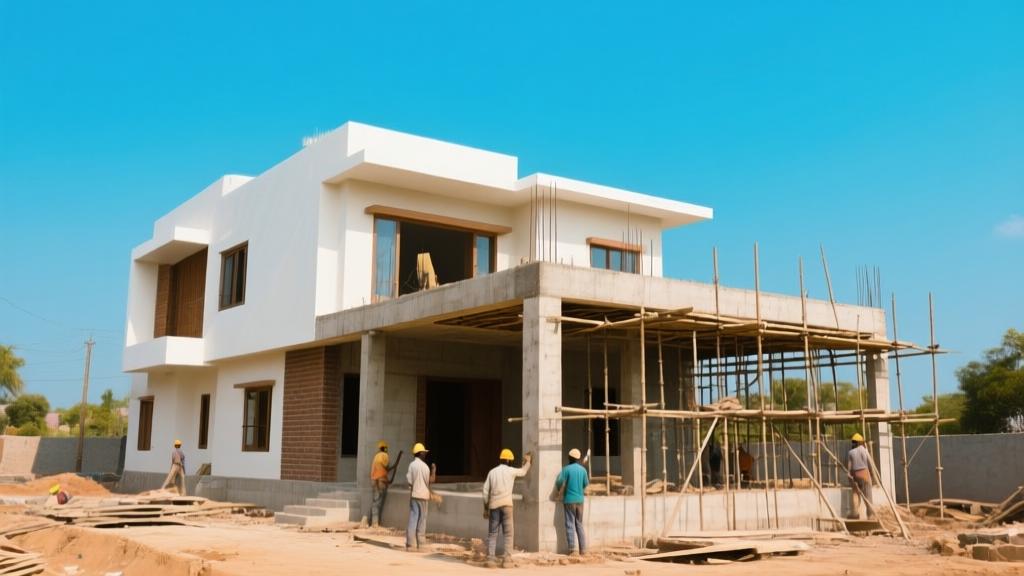
Best Time to Build a House in India - Seasonal Construction Guide 2026
Construction in India is heavily influenced by the country's diverse climate patterns. Starting a project at the wrong time can lead to delays, higher costs, and compromised quality. This guide explains how each season affects key construction activities such as cement curing, brick laying, plastering and painting. By understanding the advantages and challenges of every period, homeowners and builders can plan a smoother, more cost-effective build. The information is relevant for projects across North, South, West and East India.
India experiences four major climatic phases: a hot summer, a wet monsoon, a cool winter and transitional periods in between. Each phase brings distinct temperature ranges, humidity levels and rainfall intensity that directly impact construction materials and labour productivity. The following sections break down the seasonal implications and provide practical advice for planning your house construction in 2026. Whether you are building a modest bungalow or a large residential complex, timing can make a measurable difference in overall project success.
Summer Months (March to May) - Advantages, Challenges and Material Considerations
Summer in most parts of India is characterised by high temperatures ranging from 30°C to 45°C and low relative humidity. The dry conditions accelerate the drying of plaster and paint, allowing quicker turnover between finishing stages. However, the same heat can cause rapid loss of moisture from fresh concrete, leading to shrinkage cracks if proper curing is not maintained.
One of the main challenges during the summer is the high rate of evaporation from cement paste. To counteract this, contractors often use water-retaining curing compounds or continuously spray water on the surface for the first seven days. The use of admixtures such as retarders can also help in controlling the setting time, especially when ambient temperature exceeds 35°C.
Material selection must take the heat into account. Bricks produced in summer tend to have lower moisture content, which can lead to faster absorption of water from mortar and affect bond strength. It is advisable to store bricks in a shaded area and pre-wet them before laying. For plaster, using lime-based mixes can reduce the risk of cracking caused by rapid drying.
Water management is critical for concrete curing in summer. A practical approach is to lay a thin layer of wet sand or burlap over the formwork before pouring concrete, which acts as a moisture barrier. After placement, covering the slab with plastic sheets or curing blankets helps retain water. The recommended water-cement ratio for summer pours is slightly higher, typically 0.55 to 0.60, to ensure adequate hydration.
Monsoon Months (June to September) - Risks, Waterproofing and Weather Delays
The monsoon brings heavy rainfall, high humidity (often above 80%) and occasional flooding in low-lying areas. While the abundant moisture is beneficial for concrete curing, uncontrolled water ingress can weaken foundations and cause soil erosion. It is essential to assess the site's drainage capacity before commencing excavation.
Construction risks during monsoon include water-filled pits, delayed reinforcement placement and difficulty in handling cement bags which can get soggy and lose strength. To mitigate these risks, many contractors use waterproof sheeting and temporary de-watering pumps in excavated zones. Additionally, using ready-mix concrete with water-proofing admixtures reduces the chance of porosity in the final structure.
Waterproofing becomes a priority during the monsoon, especially for basements and ground-floor walls. Applying a bituminous membrane or a liquid waterproofing coating (Rs. 150 to Rs. 250 per litre) before plastering creates a barrier against seepage. Proper joint sealing with water-proof sealants is also necessary to prevent leaks at construction joints.
Weather delays can extend project timelines by 10 to 20 percent if not anticipated. A practical tip is to schedule critical activities such as column casting and slab pouring during relatively dry windows, typically early mornings. For foundations, the post-monsoon period (late September) is ideal because the soil has drained and the humidity remains moderate, allowing concrete to gain strength without excess water loss.
Winter Months (October to February) - Why This Is the Best Time to Build
Winter in most Indian regions offers moderate temperatures (15°C to 28°C) and lower humidity, creating optimal conditions for most construction activities. The cooler climate slows down the evaporation of water from concrete, allowing a more uniform curing process and higher ultimate strength. Consequently, many builders consider the winter period the most favourable for structural work.
Cement curing benefits significantly from the stable temperature range of winter. The recommended water-cement ratio can be reduced to 0.45-0.50, which leads to denser concrete and better workability. Brick laying also becomes easier because the mortar remains plastic for a longer period, ensuring a stronger bond between bricks.
Labor availability peaks during winter as skilled masons, carpenters and plasterers prefer to work in comfortable weather. Daily wages for a mason typically range from Rs. 800 to Rs. 1,200, while a carpenter may command Rs. 900 to Rs. 1,400. The higher workforce participation often translates to faster progress and shorter overall construction time.
Finishing works such as plastering, flooring and painting achieve the best results in winter. Plaster sets without rapid drying, reducing the risk of shrinkage cracks. Paint adheres better to surfaces when the ambient temperature is between 15°C and 30°C, and interior emulsion paints cost Rs. 150 to Rs. 300 per litre, providing a smooth finish without blistering.
Regional Variations - How Climate Zones Influence Construction Timing
India can be broadly divided into four climatic zones: the northern plains, the southern peninsula, the western coastal region and the eastern sub-tropical belt. Each zone experiences different temperature ranges, rainfall patterns and humidity levels, which affect construction schedules uniquely.
North India (including Delhi, Uttar Pradesh, Haryana and Punjab) experiences a hot summer, a pronounced monsoon and a cold winter with temperatures dropping below 5°C in some areas. The ideal construction window is from October to March, when the temperature is moderate and the ground is not water-logged. Foundations should be laid before the monsoon to avoid soil swelling, and plastering can be scheduled in early winter for optimal curing.
South India (including Karnataka, Tamil Nadu, Kerala and Andhra Pradesh) has a relatively stable temperature throughout the year but receives heavy rainfall during the southwest monsoon (June to September). In the coastal districts, humidity remains high even in winter, so concrete curing may take longer. The period from November to February is still preferred for structural work, while roofing and waterproofing are best done after the monsoon, when the humidity drops.
West India (including Maharashtra, Gujarat and Rajasthan) presents a mix of arid conditions in the interior and heavy rains on the Konkan coast. In interior Rajasthan, summer temperatures can exceed 45°C, making it difficult to cure concrete without extensive water management. The best time for construction in the interior is the winter months, whereas the coastal areas of Maharashtra benefit from a post-monsoon window (October to December) for foundation work.
East India (including West Bengal, Odisha and Bihar) experiences high humidity and intense monsoon rains, especially in the delta regions. Winter is relatively short but provides a cooler climate for plastering and painting. For regions prone to flooding, it is advisable to complete foundation and ground-floor work before the monsoon and focus on superstructure activities during the cooler months.
Budget Planning by Season - Price Fluctuations and Labour Rates
Material costs in India vary with seasonal demand and supply constraints. Cement prices typically rise by 5 to 10 percent during the summer months due to higher consumption for road works and construction, reaching Rs. 380 to Rs. 420 per 50 kg bag. During the monsoon, demand drops slightly and prices may fall to Rs. 340 to Rs. 380. Post-monsoon and winter see the most stable prices, often around Rs. 350 to Rs. 400.
Aggregates such as sand and crushed stone also experience price shifts. M-sand costs Rs. 1,800 to Rs. 2,200 per cubic meter in summer, while monsoon logistics can push the price to Rs. 2,200 to Rs. 2,500 due to transportation challenges. Steel prices for TMT bars fluctuate with global market trends but generally stay between Rs. 55,000 and Rs. 60,000 per metric ton throughout the year, with a slight increase of up to 3 percent in winter due to higher demand.
Labour rates are influenced by seasonal availability. In winter, skilled masons and carpenters command a premium of 10 to 15 percent because of higher demand, while in the monsoon, daily wages may drop by 5 to 8 percent as work slows down. To optimise budget, plan high-labour activities such as formwork and reinforcement during the post-monsoon period when wages are lower, and schedule finishing work in winter despite the higher wages to benefit from faster, higher-quality execution.
Construction Timeline by Season - Phase Wise Planning
Mapping the construction phases to the most suitable season helps avoid costly rework and delays. The table below outlines the recommended season for each major activity, along with typical durations for a standard 150 sq m residential plot.
| Phase | Recommended Season | Typical Duration |
|---|---|---|
| Site Clearing & Excavation | Post-monsoon (Oct-Nov) | 2-3 weeks |
| Foundation & Footings | Winter (Oct-Feb) | 3-4 weeks |
| Column & Slab Casting | Winter (Oct-Feb) | 4-6 weeks |
| Brickwork & Block Laying | Winter to Early Summer (Oct-May) | 6-8 weeks |
| Plastering (Internal & External) | Winter (Nov-Feb) | 3-4 weeks |
| Roofing & Waterproofing | Post-monsoon (Oct-Dec) | 2-3 weeks |
| Flooring & Tiling | Winter (Dec-Feb) | 2-3 weeks |
| Painting & Finishes | Winter (Jan-Feb) | 2-4 weeks |
By aligning each phase with its optimal season, the risk of weather-related setbacks is minimized. For example, scheduling foundation work in winter reduces the chance of soil swelling, while completing plastering before the monsoon prevents moisture-induced cracks. Adjustments can be made based on regional climate nuances, but the overall principle remains the same: work with nature, not against it.
Tips for Year-round Construction Planning
Even if you cannot wait for the ideal season, careful planning can mitigate most seasonal drawbacks. Begin with a detailed site analysis that includes soil testing, drainage assessment and local weather data for the next 12 months. This information helps you anticipate water-related challenges and schedule critical activities accordingly.
Invest in temporary protective measures such as waterproof tarpaulins, de-watering pumps and modular formwork that can be quickly assembled or removed. These tools allow you to continue work during short rain spells without compromising quality. Additionally, maintain a stockpile of essential materials like cement and sand before peak demand periods to avoid price spikes.
Establish a contingency fund of at least 5 to 10 percent of the total project cost to cover unexpected delays, material price hikes or additional labor required during extreme weather. Regularly review the project schedule against real-time weather forecasts and be prepared to shift non-critical tasks such as landscaping to more favorable periods.
Checklist for Planning Your Construction Start Date
Use the following checklist to ensure you have covered all critical aspects before breaking ground.
- Obtain accurate climate data for your specific location (temperature, rainfall, humidity).
- Conduct soil test and evaluate drainage requirements.
- Finalize architectural and structural drawings with season-specific detailing (e.g., expansion joints for high temperature zones).
- Secure quotations for cement, sand, aggregates and steel for at least three months to lock in prices.
- Arrange for water supply and curing equipment (sprinklers, curing blankets, wet sand mats).
- Schedule foundation and structural work in the winter or post-monsoon window.
- Plan waterproofing and roofing activities after the monsoon season ends.
- Confirm availability of skilled labor for the chosen start month and negotiate rates.
- Set aside a contingency budget of 5-10 percent for weather-related overruns.
- Arrange temporary site protection (tarpaulins, de-watering pumps) for monsoon risk periods.
By following this seasonal construction guide, you can align your building schedule with the most favourable weather conditions, control costs and achieve a high-quality finish. Remember that local micro-climates can differ from broader regional patterns, so always validate the plan with on-site observations and professional advice.
Related: House Design Trends for 2026