
Introduction
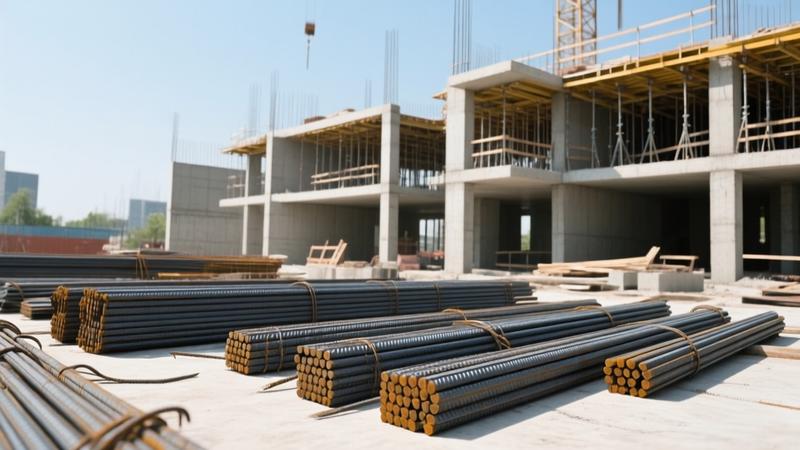
In residential construction in India steel is the backbone of the structural system. From the foundation to the roof the steel reinforcement gives concrete its tensile strength and helps the building resist loads such as dead load, live load, wind load and seismic forces. The amount of steel used in a house has a direct impact on the overall cost, on the construction schedule and on the durability of the structure. A small error in estimating steel can lead to either a shortage that causes delays or an excess that inflates the budget without adding any structural benefit. Therefore a systematic approach to calculate steel requirements is essential for architects, structural engineers, contractors and even for homeowners who want to keep a tight control on the project cost.
India has a wide variety of residential building typologies ranging from simple single-story brick houses to multi-storey concrete frames and steel frames. Each typology follows a different structural system and consequently has a different steel consumption per square foot. In addition, local building codes such as the National Building Code of India (NBC) and Indian Standard IS 456 (Code of Practice for Plain and Reinforced Concrete) prescribe minimum steel ratios that must be satisfied. Climate, seismic zone, soil bearing capacity and quality of construction materials also influence the final steel quantity.
In this blog we will walk through the key factors that determine steel consumption, present typical steel per square foot values in a convenient table, discuss the various types of steel used in Indian housing, and provide a step-by-step method to calculate the total steel weight for a given house. We will also look at steel requirements by building type and by floor level, share some thumb rules that help quick estimation, highlight common mistakes to avoid and answer frequently asked questions. By the end of the article you should be able to estimate steel requirements for a typical Indian house with confidence and accuracy.
Steel Requirement Per Sq Ft
The amount of steel used in a house is often expressed as kilograms of steel per square foot of built up area. The following table lists typical values for different construction types that are commonly seen in India. These values are based on standard design practices and on the minimum reinforcement ratios prescribed in IS 456. Actual consumption may be higher if the design includes additional features such as larger spans, higher floor loads or seismic reinforcement.
| Construction Type | Typical Steel (kg per sq ft) | Notes |
|---|---|---|
| Masonry (plain brick) | 2.5 - 3.0 | Minimal reinforcement, used mainly for load bearing walls. |
| Masonry (reinforced brick) | 3.5 - 4.0 | Reinforced brick walls with vertical and horizontal steel bars. |
| RCC (concrete frame) | 5.0 - 6.5 | Standard reinforced concrete frame with beams, slabs and columns. |
| Steel frame | 9.0 - 12.0 | Primary load bearing members are steel sections, concrete used mainly for floors. |
These numbers serve as a starting point. For a more precise estimate you need to consider the floor plan, the span of beams, the size of columns, the type of foundation and any special architectural features that affect the steel layout.
Types of Steel
In Indian residential construction the most widely used steel is Thermo-Mechanically Treated (TMT) bars. TMT bars are produced by a controlled heating and rapid cooling process that gives them a tough outer surface and a ductile core. This combination makes TMT bars suitable for resisting both tensile forces and cyclic loads caused by earthquakes. The most common grades of TMT bars are Fe 415, Fe 500D and Fe 550. Each grade differs in yield strength and elongation capacity. A detailed comparison of these grades can be found in our TMT Bar Comparison Guide.
Besides TMT bars, other steel products may be used in specific situations:
- Mild steel bars (MS) - Older constructions may still use MS bars, but they have lower yield strength and are not recommended for new projects.
- High tensile steel (HT) - Used in regions with high seismic activity where additional ductility is required.
- Cold rolled steel sections - Employed in steel frame houses for columns, beams and roof trusses.
- Corrosion resistant steel - In coastal areas or places with aggressive soil conditions a corrosion resistant grade such as CRCA (Corrosion Resistant Carbon Steel) may be specified.
The choice of steel grade and type influences not only the structural performance but also the weight calculation. For example, Fe 500D bars have a higher tensile strength than Fe 415, which means you can use a slightly smaller diameter for the same design load, resulting in a lower total weight. However, local availability, cost and the experience of the construction crew also play a role in the final selection.
Once the steel grade and bar diameters are decided, the next step is to convert the required steel weight into actual bar lengths and quantities. This can be done using a simple formula or by using an online calculator. Our Calculate TMT Bar Weight tool helps you quickly determine how many 12-meter bars of a given diameter are needed for a specific weight.
Step by Step Calculation Method
Below is a practical method that you can follow to estimate the steel requirement for a house. The method works for any residential typology and can be refined with more detailed design data if available.
- Determine the total built up area. Add the carpet area of all floors, the terrace area and any covered verandas. The built up area is usually expressed in square feet.
- Select the appropriate steel per square foot value. Use the table above as a reference. Choose a value that matches your construction type (for example 5.5 kg/sq ft for a typical RCC frame).
- Calculate the base steel weight. Multiply the total built up area by the selected steel per sq ft value. This gives you an initial estimate of steel weight in kilograms.
- Adjust for openings and slab thickness. Large openings such as windows, doors and stairwells reduce the amount of reinforcement needed in the surrounding slab. Reduce the base weight by 5-10% for each major opening. Conversely, if you are using a thicker slab (e.g., 150 mm instead of 120 mm) add 5-8% to the base weight.
- Include additional reinforcement for seismic zones. If the house is located in a high seismic zone (Zone III or IV as per IS 1893), increase the steel weight by 10-15% to meet the extra ductility requirements.
- Account for wastage and cutting. During construction a certain amount of steel is lost due to cutting, bending and handling. Add a wastage factor of 2-3% to the adjusted weight.
- Convert weight to bar quantities. Use the standard TMT bar weight formula:
Weight (kg) = (Diameter in mm)^2 x Length in meters x 0.00617
Alternatively, use the online TMT bar weight calculator to determine how many 12-meter bars of each required diameter are needed. - Round up for procurement. Suppliers usually sell bars in batches of 50 kg or more. Round the final weight up to the nearest 50 kg to avoid shortfalls.
Following these steps will give you a reasonably accurate estimate that can be refined later by the structural engineer during the detailed design phase.
Steel by Building Type
The total steel consumption varies significantly with the type of house you are building. Below are typical ranges for three common residential categories in India.
- Single-story bungalow. A single floor house with a simple rectangular plan and a flat concrete slab generally requires 4.5-5.5 kg of steel per square foot. For a 1500 sq ft bungalow the total steel weight will be in the range of 6,750-8,250 kg.
- Duplex or two-storey house. Adding a second floor increases the load on the ground floor columns and foundation. The average steel consumption rises to 5.5-6.5 kg per square foot of built up area. A 2500 sq ft duplex (including both floors) may need 13,750-16,250 kg of steel.
- Multi-storey apartment block (up to 5 storeys). With larger spans, thicker slabs and higher column loads, the steel usage typically reaches 6.5-8.0 kg per square foot. A 5000 sq ft building spread over five floors can therefore require 32,500-40,000 kg of steel.
These figures are meant as a guideline. The actual requirement will depend on factors such as the length of beams, the number of columns, the presence of cantilevers, the type of foundation (isolated footings vs. raft) and the local seismic classification.
Steel by Floor
When you have a multi-storey house it is useful to estimate the steel requirement for each floor separately. The following table assumes a typical floor area of 1000 sq ft per level and uses a base steel consumption of 5.5 kg per sq ft for an RCC frame. Adjustments are made for increasing column sizes on lower floors and decreasing slab thickness on upper floors.
| Floor | Approx Steel (kg) | Comments |
|---|---|---|
| Ground floor (foundation and first slab) | 6,050 | Higher column reinforcement and base slab thickness. |
| First floor | 5,500 | Standard slab and column reinforcement. |
| Second floor | 5,200 | Reduced column size, thinner slab if permitted. |
| Third floor | 5,000 | Lightest slab and column reinforcement. |
| Rooftop (if concrete slab) | 4,800 | Only slab reinforcement, no columns. |
For houses with different floor areas or different construction types you can scale the numbers proportionally. The key is to keep track of the steel used in foundations, columns, beams, slabs and any special elements such as staircases or balconies.
Thumb Rules
Below are some quick rules of thumb that can help you estimate steel requirements without a detailed calculation. These are based on typical Indian residential designs and should be used as a sanity check.
- Use 5-6 kg of steel per square foot as a baseline for a standard RCC framed house.
- Add 10% extra steel if the house is located in a high seismic zone (Zone III or IV).
- Increase steel by 5-8% for slab thickness greater than 120 mm.
- Round up the final steel weight to the nearest 50 kg for procurement convenience.
- Always include a wastage allowance of 2-3% to cover cutting and handling losses.
These thumb rules are especially useful during the early budgeting stage when you only have an approximate floor plan.
Common Mistakes
Even experienced builders sometimes make errors while estimating steel. Being aware of these pitfalls can save time and money.
- Relying on a single generic steel per sq ft value without adjusting for the specific design features of the house.
- Ignoring the reduction in steel requirement caused by large openings in slabs and walls.
- Not adding a proper wastage factor, leading to shortage of steel on site and work stoppage.
- Choosing a lower grade of TMT bar to cut costs, which may compromise structural safety especially in seismic zones.
- Skipping consultation with a qualified structural engineer and assuming that standard values will work for all soil conditions.
By checking each of these items during the planning phase you can avoid costly revisions later.
FAQs
- 1. How do I decide which TMT bar grade to use?
- The choice of grade depends on the design load, seismic zone and local building code requirements. Fe 415 is the minimum grade for most residential projects, while Fe 500D and Fe 550 provide higher strength and better ductility. Consult your structural engineer to select the appropriate grade.
- 2. Can I use mild steel bars instead of TMT bars?
- Mild steel bars have lower yield strength and are not recommended for new residential construction in India. They may not meet the minimum reinforcement ratios of IS 456 and can lead to reduced durability.
- 3. How much steel is needed for a 1200 sq ft single-story house?
- Assuming a standard RCC frame with 5.5 kg of steel per sq ft, the total steel weight would be approximately 6,600 kg. Add 2-3% for wastage and any additional reinforcement for openings or seismic requirements.
- 4. What is the best way to order steel to avoid shortage?
- Order steel in batches of 50 kg or more and round up the total weight to the nearest 50 kg. Include a 2-3% wastage allowance and confirm the bar diameters with the supplier. Using the TMT bar weight calculator helps you specify the exact number of 12-meter bars required.
- 5. How does the concrete mix affect steel consumption?
- The concrete mix determines the strength and workability of the slab. A higher grade mix (e.g., M25 or M30) can reduce the required steel for a given load because the concrete itself can carry more compressive force. However, the mix must be compatible with the chosen TMT bar grade. For detailed mix design refer to our Concrete Mix Ratio Guide.
Conclusion
Accurate estimation of steel requirements is a critical step in planning and budgeting a residential building in India. By understanding the typical steel consumption per square foot, the types of steel available, and the factors that influence reinforcement design, you can develop a reliable estimate early in the project. The step-by-step method outlined in this article, together with the thumb rules and the tables provided, offers a practical framework that can be adapted to any house size or construction type. Always remember to include allowances for wastage, seismic reinforcement and local code compliance, and to verify the final quantities with a qualified structural engineer. With a solid estimate in hand you can negotiate better with suppliers, avoid costly delays, and ensure that your house is built safely and economically.