How to Choose the Right Insulation Material for Your Home - Complete Guide 2026
Insulation is no longer a luxury item for Indian homes - it is a necessity. With temperatures soaring above 45°C in many parts of the country during summer, humidity reaching 90% during the monsoon, and chilly winters in the north, a well-insulated house can reduce energy bills, improve indoor comfort, and protect the building structure from moisture damage. This guide walks you through the most common insulation materials available in India, how to match them with your local climate, and practical steps for installation, maintenance, and long-term performance.
Why Insulation Matters in the Indian Climate
India's climate is a blend of extreme heat, heavy monsoon rains, and, in some regions, cold winters. Each of these conditions creates specific challenges for a residential building:
- Heat gain in summer: Direct sunlight on roofs and walls can increase indoor temperatures by 10°C to 15°C. Without insulation, air-conditioning units work harder, raising electricity bills.
- Humidity and moisture: The monsoon season brings prolonged exposure to moisture. If walls, roofs, or floors are not insulated and sealed properly, condensation can lead to mould, rot, and structural weakening.
- Cold winters in north India: In states such as Jammu & Kashmir, Himachal Pradesh, and parts of Uttar Pradesh, indoor temperatures can drop below 5°C. Lack of insulation makes heating inefficient and uncomfortable.
- Energy conservation: The Indian government encourages energy-saving measures under the Energy Conservation Building Code (ECBC). Proper insulation helps meet these standards and may qualify homeowners for subsidies.
Choosing the right insulation material is therefore a key decision that impacts comfort, health, and cost for years to come.
Types of Insulation Materials Available in India
India's construction market offers a wide range of insulation products. Below is a brief overview of the most common types, their typical applications, and their suitability for Indian conditions.
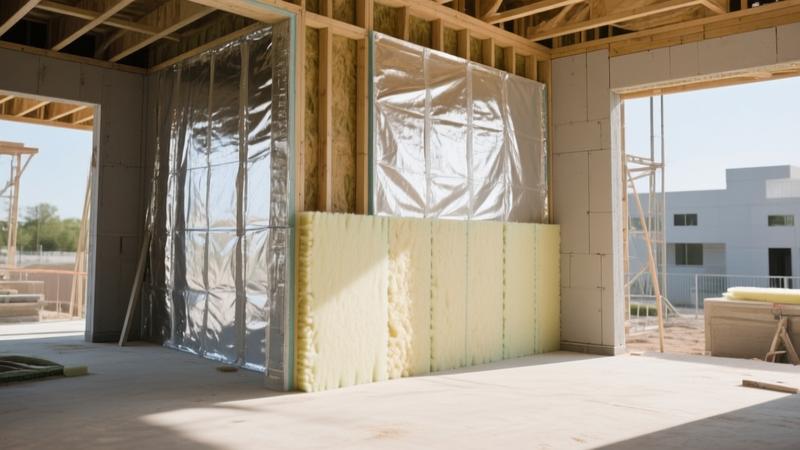
- Fiberglass: Made from fine glass fibers, it is available in batts, rolls, and loose fill. It is lightweight, non-combustible, and widely used for wall and attic insulation.
- Rigid Foam Board (Polyurethane or Polystyrene): These are dense panels that provide high R-value per inch. They are often used on roofs, exterior walls, and under concrete slabs.
- Spray Foam (Open-cell and Closed-cell): Applied as a liquid that expands on contact, spray foam creates an airtight seal. Closed-cell foam also adds structural strength.
- Reflective Insulation (Aluminium foil faced): Works by reflecting radiant heat rather than resisting conductive heat flow. Ideal for hot roof decks and attics.
- Cellulose: Made from recycled paper treated with fire retardants. It is blown into wall cavities and offers good thermal performance.
- Aerogel: A high-technology, ultra-light material with exceptional R-value. It is expensive but used in premium projects and retrofit applications where space is limited.
Each material has its own strengths and limitations related to cost, fire safety, moisture resistance, and ease of installation. The following sections help you match these attributes with your location and building design.
How to Choose Based on Your Climate Zone
India can be broadly divided into four climate zones for residential construction:
- North India (Cold winters, hot summers): States such as Delhi, Punjab, Haryana, and Uttar Pradesh experience temperature extremes. Insulation should provide both heat retention in winter and heat rejection in summer.
- South India (Hot and humid year-round): Kerala, Karnataka, Tamil Nadu, and Andhra Pradesh see high temperatures and humidity. Reflective insulation and moisture-resistant boards work well.
- East India (Monsoon-heavy, moderate heat): West Bengal, Odisha, and Bihar have intense monsoon rainfall. Materials with good moisture barriers are essential.
- West India (Coastal humidity, desert heat): Gujarat, Maharashtra (coastal), and Rajasthan have diverse conditions. In coastal areas, corrosion-resistant and vapor-tight insulation is important, while in desert zones, reflective and high-R-value boards help reduce heat gain.
Below is a quick climate-zone guide to help you select the most suitable material:
| Climate Zone | Recommended Insulation | Key Reason |
|---|---|---|
| North (cold winters) | Fiberglass batts for walls, Rigid foam board for roofs | High R-value for heat retention, easy to install in new construction |
| South (hot & humid) | Reflective foil insulation for roofs, Closed-cell spray foam for walls | Reflects radiant heat, provides airtight seal against humidity |
| East (monsoon heavy) | Cellulose with vapor barrier, Polyisocyanurate board with waterproof coating | Good moisture resistance, affordable for retrofits |
| West (coastal) | Aerogel panels for roof, Polyurethane foam board for walls | Superior R-value in limited space, resistant to salt-air corrosion |
Remember that local availability and cost also influence the final decision. Always check with regional suppliers for the latest pricing and product certifications.
Insulation for Different Parts of Your Home
Each part of a house - roof, walls, floor, and basement - has unique thermal and moisture challenges. Selecting the right material for each area maximises comfort and energy savings.
- Roof: The roof is the primary source of heat gain in Indian homes. For flat roofs, rigid foam board (polyurethane or polyisocyanurate) offers high R-value and acts as a waterproof membrane. For sloped or tiled roofs, reflective foil insulation combined with a ventilated air gap works well. In coastal areas, consider the RCC roof waterproofing guide to prevent water ingress before installing insulation.
- External Walls: In hot climates, external wall insulation reduces heat transfer. Fiberglass batts, cellulose, or spray foam can be placed inside the cavity. For solid masonry walls, apply a layer of rigid foam board on the interior side and finish with plaster.
- Internal Walls: For partition walls, lightweight fiberglass or cellulose is cost-effective. If you need sound insulation as well, consider adding a layer of mineral wool.
- Floors: In homes with raised floors or concrete slabs, install a thin layer of rigid foam board under the floor finish to prevent heat loss to the ground. In basements, closed-cell spray foam provides both insulation and moisture barrier.
- Basement / Crawl Spaces: These areas are prone to dampness. Closed-cell spray foam or rigid foam board with a vapor barrier is recommended. Ensure proper drainage before insulation.
When planning insulation for any part of the house, coordinate with waterproofing measures. Our waterproofing guide for homeowners explains how to seal joints, apply bitumen membranes, and use sealants to protect insulation from moisture.
Key Factors to Consider When Selecting Insulation
Choosing the right insulation material involves evaluating several performance and practical criteria. Below are the most important factors for Indian homeowners and builders.
- R-Value: This measures thermal resistance per inch of material. Higher R-value means better insulation. In hot climates, aim for a minimum overall R-value of 3.0 for walls and 5.0 for roofs.
- Fire Resistance: Check the fire rating (Class A, B, C). Materials like fiberglass and mineral wool are non-combustible, while some foam boards require fire-retardant additives.
- Moisture Resistance: In monsoon-prone areas, select materials that do not absorb water and have a vapor barrier. Closed-cell spray foam and rigid foam board are excellent choices. For added protection, refer to our prevent water seepage in walls guide.
- Cost and Availability: Fiberglass and reflective foil are the most affordable and widely available. Aerogel offers superior performance but may be cost-prohibitive for average homes.
- Installation Complexity: Some materials require professional installation (spray foam), while others can be DIY (fiberglass batts). Factor in labor costs and skill level.
- Environmental Impact: Recycled cellulose and aerogel have lower embodied carbon. If sustainability is a priority, consider these options.
Comparison of Common Insulation Types
| Insulation Type | R-Value (per inch) | Cost Range (Rs. per sq.m) | Fire Rating | Best Use Case |
|---|---|---|---|---|
| Fiberglass (batts/rolls) | 2.9 | 80-120 | Class A | External & internal walls, attics |
| Rigid Foam Board (Polyurethane) | 4.0 | 150-250 | Class B | Flat roofs, under-slab, exterior walls |
| Spray Foam (Closed-cell) | 6.0 | 250-400 | Class B | Roof decks, crawl spaces, airtight sealing |
| Reflective Insulation (Aluminium foil) | 1.0 (effective) | 50-90 | Class C | Hot roofs, attics, metal sheeting |
| Cellulose (blown) | 3.5 | 100-150 | Class B (treated) | Wall cavities, retrofits |
| Aerogel Panels | 10.0 | 1200-1800 | Class A | High-performance roofs, limited-space applications |
Installation Tips and Common Mistakes to Avoid
Proper installation is as important as material selection. Follow these guidelines to ensure optimal performance:
- Prepare the surface: Clean walls, roofs, and floors of dust, grease, and loose particles. Repair any cracks or gaps before applying insulation.
- Seal air leaks first: Use expanding foam or weather-proof sealants to close gaps around windows, doors, and service penetrations. This step works hand-in-hand with waterproofing and improves the effectiveness of insulation.
- Use vapor barriers where needed: In humid regions, install a vapor-retarder on the warm side of the insulation to prevent condensation. However, avoid double-vapor-barriers that can trap moisture.
- Maintain continuity: Overlap joints by at least 6 inches and fasten panels with appropriate adhesives or mechanical fixings. For batts, ensure they fit snugly without compression.
- Protect against moisture during installation: Install insulation on a dry day, and if using spray foam, keep the area well-ventilated to allow the chemicals to cure properly.
- Don't forget fire safety: Apply fire-retardant coatings on foam boards in areas where code requires it, especially in kitchens and near electrical wiring.
- Hire qualified professionals for spray foam and aerogel: Incorrect mixing or application can lead to gaps, reduced R-value, or safety hazards.
- Integrate with waterproofing: Follow the steps in the waterproofing guide for homeowners to apply bitumen membranes or liquid waterproofing before installing insulation on roofs and basements.
Common mistakes to watch out for include:
- Installing insulation over damp surfaces - leads to mould and loss of R-value.
- Compressing batts or rolls - reduces their effective thickness.
- Leaving gaps at edges and corners - creates thermal bridges.
- Using low-grade foam with high off-gassing - can affect indoor air quality.
- Neglecting fire-rating requirements - may violate local building codes.
Maintenance and Longevity of Insulation
Insulation can last for decades if maintained properly. Here are practical steps to preserve its performance:
- Regular visual inspection: Check for signs of moisture, mould, or damage after the monsoon season.
- Re-seal joints annually: Use silicone or acrylic sealants to maintain airtightness, especially around windows and doors.
- Clean dust buildup: Dust can reduce the reflective efficiency of foil insulation. Gently wipe with a dry cloth.
- Monitor for pest activity: Some cellulose products can attract insects if not properly treated. Apply insect-resistant sprays if needed.
- Replace damaged sections: If any panel shows cracks or delamination, replace it promptly to avoid thermal bridging.
- Re-assess after major renovations: Adding new extensions or changing roof color may alter thermal dynamics; consider upgrading insulation accordingly.
Most insulation materials retain their R-value for 20-30 years, except for cellulose, which may settle and lose up to 5% of its value over time. Proper maintenance ensures you get the full benefit throughout the material's lifespan.
Frequently Asked Questions
- What is the minimum R-value required for a typical Indian home? For hot climates, aim for an overall wall R-value of 3.0 and roof R-value of 5.0. In colder northern regions, increase wall R-value to 4.0 and roof R-value to 6.0.
- Can I install insulation myself, or do I need a professional? Fiberglass batts, reflective foil, and rigid foam board can be installed by competent DIYers with basic tools. Spray foam, aerogel, and large-scale roof insulation are best handled by trained professionals to ensure safety and performance.
- How does insulation affect my electricity bill? Proper insulation can reduce air-conditioning load by 15-30% and heating load by 20-40%, translating into significant savings on monthly electricity bills.
- Is insulation safe for households with children and pets? Most insulation materials used in Indian homes are non-toxic once installed. However, avoid direct contact with uncured spray foam and wear protective gear during installation.
- Do I need a separate waterproofing layer if I use foam board? Yes. While many foam boards are water-resistant, they are not waterproof. Applying a waterproof membrane or bitumen coating, as described in the RCC roof waterproofing guide, protects the insulation from prolonged exposure to rain.
Choosing the right insulation material is a critical step toward a comfortable, energy-efficient, and durable home. By understanding your local climate, the specific needs of each part of your house, and the performance characteristics of available products, you can make an informed decision that pays off for years to come. Start planning today, and enjoy a cooler summer, warmer winter, and lower utility bills tomorrow.