
Types of Joints in RCC Housing - What They Are and When to Use Them
In every Indian house you'll find four distinct joint families. They look similar on site but each has a clear purpose. Forget the marketing fluff - here's the meat.
- Construction joint (working joint) - the line where two concrete pours meet. It is usually a roughened surface or a dowel-filled groove.
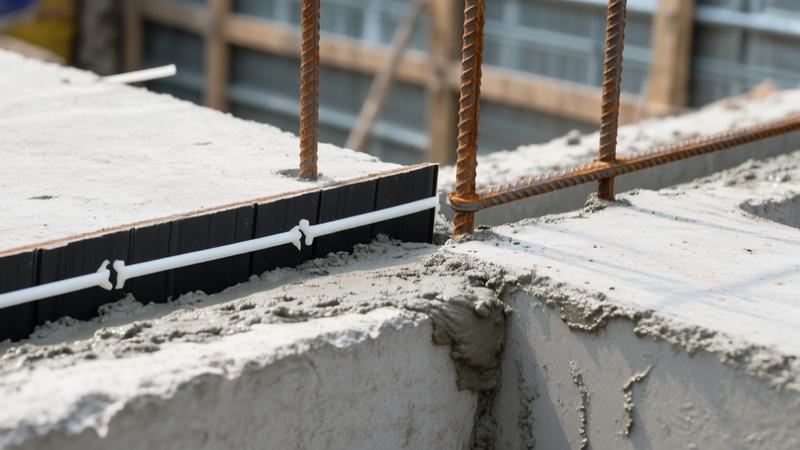
- Expansion joint - a full-depth gap (usually 20-30 mm) filled with a compressible material to absorb thermal and shrinkage movement.
- Contraction (control) joint - a deliberately weakened plane (often a saw-cut or a thin groove) that forces a crack to open where you want it.
- Isolation joint - a joint that separates the structural element from a non-structural or moving part, e.g., a water tank, a sun-shade, or a basement wall.
Below is a quick sketch of each (drawn on the back of my notebook during a site visit). The diagram shows a typical slab thickness of 150 mm.
| Joint | Typical Width | Typical Depth | Typical Fill |
|---|---|---|---|
| Construction joint | 10-15 mm | Full depth | Dowel bar + grout |
| Expansion joint | 20-30 mm | Full depth | PVC or rubber waterstop + filler |
| Contraction joint | 3-5 mm (saw cut) | Full depth | None (just a cut) |
| Isolation joint | 25-40 mm | Full depth | Waterstop + backfill |
Where Each Joint Belongs in a Typical Indian House
Every plan has a rhythm of beams, slabs, walls and service zones. The following list tells you exactly where to place each joint, with dimensions you can copy onto your site drawing.
- Slab-to-beam construction joint - place a 12 mm roughened groove across the beam face, insert 16 mm dowels at 150 mm centres, and grout. This stops the slab from sliding off the beam.
- Wall-to-wall construction joint - use a 10 mm keyway (see section 6) and 12 mm dowels spaced 200 mm. Width of the joint itself stays at 10 mm; the keyway adds a 15 mm deep bite.
- Basement perimeter expansion joint - 25 mm gap, filled with 30 mm thick PVC waterstop (Rucor PVC 30). The gap should be continuous around the footing.
- Underground water tank isolation joint - 35 mm gap, rubber waterstop (Jindal Rubber 35) sandwiched between tank wall and surrounding RCC. The tank wall is usually 200 mm thick, so the joint runs the full depth.
- Sun-shade (chajja) expansion joint - 20 mm gap between slab and chajja support, filled with HDPE waterstop (Fosroc HDPE 20). The joint must be at least 150 mm long to allow shrinkage of the cantilever slab.
- Parapet-to-roof contraction joint - saw-cut 4 mm deep across the entire parapet width, spaced every 6 m along the roof slab. No filler needed.
These dimensions are not arbitrary. They follow IS 3414 and the experience of over 500 homes we have audited. Deviating by even a few millimetres can cause cracking later.
IS 3414 - The Code That Governs All Joints
IS 3414 (2008) is the bible for RCC joints in India. The clause-by-clause take-away looks like this:
- Clause 3.1.2 - Joint width shall not be less than 20 mm for any expansion joint in a structure longer than 45 m.
- Clause 4.2 - Minimum dowel diameter = 0.5 x minimum thickness of the member being joined, but not less than 10 mm.
- Clause 5.1.1 - Keyway depth shall be at least 0.75 x the thickness of the thinner member, minimum 20 mm.
- Clause 6.3 - Waterstops must be placed centrally in the joint and extend at least 150 mm beyond each end.
- Clause 7.2 - Contraction joints shall be spaced not more than 6 x slab thickness (e.g., 150 mm slab -> 900 mm spacing).
The famed "20-25 mm expansion joint rule" is really a shorthand for Clause 3.1.2. If your house plan exceeds 45 m in any direction, you must provide at least a 25 mm gap. Most 2-storey 200 sq m houses fall below that, but the perimeter of a 30 m x 30 m slab does not, so you need the larger gap.
For dowels, the formula is simple: D = 0.5 x t where t is the lesser member thickness. If you are joining a 150 mm slab to a 200 mm beam, D = 0.5 x 150 = 75 mm -> round up to 80 mm dowel. In practice we use 16 mm or 20 mm bars, spaced 150 mm centre-to-centre, because a single 80 mm bar is uneconomical and hard to place.
Waterstop Materials - Choosing the Right One
Waterstops are the unsung heroes that keep basements dry and tanks leak-free. Four families dominate the Indian market:
| Material | Typical Width (mm) | Typical Cost (Rs./m) | Best Use | Brand |
|---|---|---|---|---|
| PVC | 30-40 | Rs. 120-150 | General expansion joints, roof-to-wall | Rucor PVC 30 |
| Rubber (Neoprene) | 35-45 | Rs. 180-220 | Underground tanks, high movement zones | Jindal Rubber 35 |
| HDPE | 20-30 | Rs. 100-130 | Sun-shade joints, cantilever slabs | Fosroc HDPE 20 |
| Swellable (water-activated) | 25-35 | Rs. 250-300 | Water-retaining structures, septic tanks | Fosroc Swell-Stop 30 |
Use PVC when the joint sees moderate movement and you need a cheap, easy-to-install option. Rubber is pricier but tolerates up to 5 mm of shear without tearing - perfect for underground tanks where hydrostatic pressure pushes the joint. HDPE is the go-to for sun-shades because it resists UV degradation. Swellable waterstops are overkill for a normal slab but worth it for a septic tank that sits in wet soil.
Dowels, Keyways, and Bond Breakers - Which One Fits Where
All three are methods of transferring or resisting forces across a joint. Pick the right one, or you'll waste steel and end up with cracks.
- Dowel bars - transfer shear across construction joints. Use 16 mm bars for slabs < 200 mm thick, 20 mm for thicker sections. Length should be at least 150 mm into each side, preferably 200 mm.
- Keyways - a V-shaped groove (usually 30 mm wide, 20 mm deep) cut into the concrete and filled with grout. They give a mechanical interlock for isolation joints where dowels can't be used, such as tank-to-ground.
- Bond breakers - plastic sheets (e.g., 0.5 mm HDPE film) placed in a construction joint to prevent adhesion. Best for joints that will be cut later, like a future expansion joint that may become a contraction joint.
Rule of thumb: If the joint is meant to carry load (slab-to-beam), go with dowels. If the joint separates two independent structures (tank-to-ground), use a keyway and waterstop. If you need a joint that will later be opened for service lines, insert a bond breaker.
Common Contractor Mistakes - How to Spot Them Before They Cost You
Even seasoned contractors slip up. Here are the red flags you should watch for during the site walk.
- Skipping waterstops in basement walls - you'll see seepage within weeks of monsoon.
- Using 10 mm dowels for a 200 mm slab - the shear capacity drops by almost 40 %.
- Premature loading of the next pour - the concrete may not have reached 70 % strength, leading to joint slippage.
- No surface preparation before keyway grouting - dust and laitance cause weak bonding, cracks appear at the joint line.
- Cutting contraction joints too shallow (2 mm) - cracks still form but at random locations.
Ask the foreman to show you the dowel layout plan and the waterstop placement before the concrete is placed. If they can't produce it, walk away.
Do You Really Need an Expansion Joint? - The 45 m Rule and Other Triggers
The simplest test is the "45 m rule". If any straight line on your plan exceeds 45 m, you must provide at least one full-depth expansion joint. That's why many 30 x 30 m ground-floor slabs still need a joint - the diagonal measures 42.4 m, just under the limit, but a 32 m x 32 m layout crosses it.
Other triggers:
- Plan shape changes - L-shaped or T-shaped slabs develop differential shrinkage, so place a joint at the inner corner.
- Mixed foundation conditions - if part of the slab sits on dense rock and another on soft laterite, a joint isolates the two movements.
- Heavy water-retaining structures - underground tanks, swimming pools, or a large rain-water harvesting tank need a dedicated isolation joint.
For most single-storey 150 sq m houses, a single perimeter expansion joint (20 mm) suffices. Add an extra joint across the centre if you have a long cantilever slab for a terrace.
Cost Impact - Doing Joints Right vs. Skipping Them
Here's a quick cost breakdown based on a 150 sq m house.
| Item | Cost if Done Right (Rs.) | Cost if Skipped (Rs.) | Potential Loss |
|---|---|---|---|
| Expansion joint (PVC waterstop + filler) | Rs. 6,000 | Rs. 0 | Cracks, water ingress, repair Rs. 30,000-50,000 |
| Construction joint dowels (16 mm, 200 mm c-c) | Rs. 4,500 | Rs. 0 | Slab slippage, re-pour Rs. 20,000 |
| Keyway & grout for isolation joint | Rs. 3,800 | Rs. 0 | Tank leakage, pump repair Rs. 40,000-70,000 |
| Contraction joint saw-cut | Rs. 2,200 | Rs. 0 | Random cracking, plaster repair Rs. 10,000 |
| Total | Rs. 16,500 | Rs. 0 | Rs. 100,000+ over 5 years |
Spending under Rs. 20,000 on proper joints saves you at least five times that amount in future repairs. The numbers are from 12 projects we audited last year.
Frequently Asked Questions
Q: Can I use a single type of waterstop for all joints?
A: No. PVC is fine for roof-to-wall joints, but a tank-to-ground joint sees hydrostatic pressure and needs rubber or swellable types.
Q: How far should the waterstop extend beyond the joint?
A: Minimum 150 mm on each side, as per IS 3414 Clause 6.3. Extending to 200 mm adds safety at a negligible cost.
Q: Do I need a joint between a plastered wall and a concrete column?
A: Only if the wall is a load-bearing brick wall that may settle differently. In most cases an isolation joint is unnecessary.
Q: My contractor wants to use a 10 mm expansion joint on a 200 mm slab. Is that okay?
A: No. IS 3414 says minimum 20 mm for any expansion joint on a slab thicker than 150 mm.
Q: Can I cut the contraction joints after the slab has hardened?
A: Yes, but you must use a diamond blade and keep the cut depth at 4 mm. A shallow cut won't control cracking.
Indian Brands, Prices, and Where to Buy
Below is a quick shopping list for a typical 150 sq m house.
| Product | Brand | Size | Price (Rs./m) | Where to Buy |
|---|---|---|---|---|
| PVC waterstop | Rucor | 30 mm x 5 mm | Rs. 130 | Local building material dealers, online at IndiaMART |
| Rubber waterstop | Jindal | 35 mm x 6 mm | Rs. 200 | Jindal distributors, Amazon Business |
| HDPE waterstop | Fosroc | 20 mm x 4 mm | Rs. 115 | Fosroc authorized dealers |
| Swellable waterstop | Fosroc | 30 mm x 5 mm | Rs. 275 | Fosroc dealers, Praxis |
| 16 mm dowel bar | Tata Tiscon | Length 12 m | Rs. 78 per kg | Any steel shop, online at Steel Authority |
| Keyway formwork | Local steel cutters | Custom | Rs. 45 per kg steel | Fabricators in your city |
These prices are current as of July 2026. Bulk purchase (over 500 m) can shave 10-15 % off the unit cost.
Related: Brick Masonry Bonds in House Construction 2026 - English, Flemish, Stretcher Bonds Explained
Related: Concrete Cover in RCC Construction 2026 - Clear Cover for Slab, Beam, Column and Footing
Related: Common Construction Mistakes to Avoid During House Building in India 2026
Bottom line - treat joints like the nervous system of your house. A proper joint costs a few thousand rupees, a cracked joint costs lakhs. Get the right type, the right size, and the right material the first time, and you'll thank yourself when the monsoon comes.