
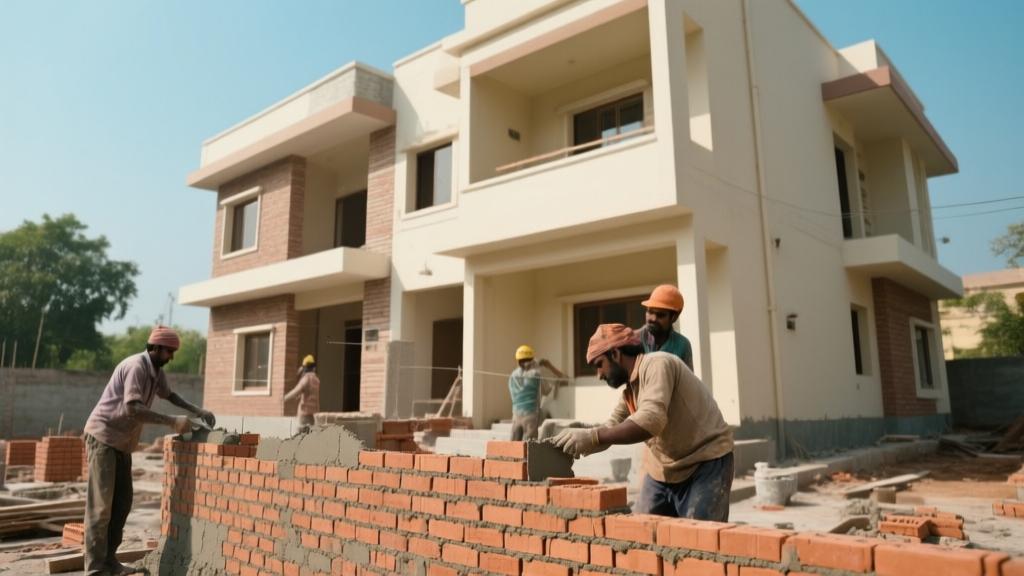
Introduction
Construction labor costs in India have always been a critical component of the overall building budget. In 2026, labor expenses continue to dominate, typically accounting for 30-40% of the total project cost. Understanding how labor rates are formed, how they vary across regions and activities, and what factors can influence them is essential for homeowners, builders, and developers who want to keep their projects financially viable. This article provides a deep-dive into the current labor market, breaking down rates per square foot, per activity, and by skill level, while also offering practical tips to optimise costs without compromising quality. For a comprehensive view of material expenses, refer to the Building Materials Price List 2026 and explore the House Construction Cost Calculator for real-time budgeting.
Construction Labor Cost Per Sq Ft in India 2026
The average labor cost per square foot (sq ft) for residential construction in 2026 varies significantly across city tiers. Tier-1 metros such as Delhi NCR, Mumbai, and Bangalore command the highest rates due to higher living costs and stronger demand for skilled workers. Tier-2 and Tier-3 cities have comparatively lower rates, but the gap is narrowing as labor mobility increases.
| City Tier | Average Labor Cost (Rs. per sq ft) | Typical Project Types |
|---|---|---|
| Tier-1 (Delhi NCR, Mumbai, Bangalore, Chennai, Hyderabad) | Rs. 350 - Rs. 550 | Mid-range to premium apartments, villas |
| Tier-2 (Pune, Ahmedabad, Kochi, Lucknow, Jaipur) | Rs. 250 - Rs. 400 | Standard housing, townships |
| Tier-3 (Bhopal, Patna, Bhubaneswar, Visakhapatnam) | Rs. 180 - Rs. 300 | Budget housing, government schemes |
These figures represent the total labor component, inclusive of wages, statutory contributions, and contractor margins. The rates are expressed as a range because they fluctuate with the scale of the project, seasonality, and the specific mix of skilled versus unskilled labor required.
Labor Charges by Construction Activity
Different construction activities attract distinct labor rates based on the skill intensity, equipment usage, and time consumption involved. Below is a detailed breakdown of typical labor charges for common activities in 2026.
| Construction Activity | Labor Cost (Rs. per sq ft) | Comments |
|---|---|---|
| Masonry (brickwork, blockwork) | Rs. 80 - Rs. 120 | Includes masons, helpers, and material handling. |
| Plastering (internal & external) | Rs. 40 - Rs. 70 | Depends on finish quality (smooth vs. textured). |
| RCC Work (casting, formwork) | Rs. 120 - Rs. 180 | Higher in metros due to formwork labor. |
| Flooring (tiles, vitrified, wood) | Rs. 30 - Rs. 60 | Varies with material type and pattern complexity. |
| Painting (internal & external) | Rs. 25 - Rs. 45 | Includes surface preparation and finishing. |
| Electrical (wiring, switchgear) | Rs. 45 - Rs. 75 | Skilled electricians and apprentices. |
| Plumbing (pipes, fittings) | Rs. 40 - Rs. 65 | Includes pipe laying and jointing. |
| False Ceiling (gypsum, metal grid) | Rs. 35 - Rs. 55 | Depends on design intricacy. |
These activity-wise rates can be combined to estimate the total labor cost for a given design. For a more detailed analysis of structural costs, the RCC Frame Structure Cost Guide provides valuable benchmarks.
Skilled vs Semi-Skilled vs Unskilled Labor Rates
Labor in the Indian construction sector is broadly classified into three categories: skilled, semi-skilled, and unskilled. Each category commands distinct daily wages and monthly rates, reflecting the expertise and productivity levels.
| Labor Category | Typical Daily Wage (Rs.) | Typical Monthly Rate (Rs.) | Examples |
|---|---|---|---|
| Skilled | Rs. 800 - Rs. 1,200 | Rs. 22,000 - Rs. 30,000 | Mason, carpenter, electrician, plumber |
| Semi-Skilled | Rs. 500 - Rs. 750 | Rs. 14,000 - Rs. 21,000 | Helper-mason, assistant carpenter, junior electrician |
| Unskilled | Rs. 300 - Rs. 500 | Rs. 8,500 - Rs. 14,000 | General laborer, site cleaner, material carrier |
Wages may be higher in metro cities due to cost-of-living adjustments and stronger labor unions. Seasonal demand spikes, especially during the pre-monsoon construction window, can also push rates upward. Employers often provide additional allowances for overtime, night shifts, and hazardous work, which should be factored into the total labor budget.
Factors Affecting Labor Costs
Several interrelated factors influence how much you will pay for construction labor in 2026. Understanding these variables helps in planning and negotiating better rates.
- Location: Proximity to major urban centres, local wage standards, and availability of skilled workers.
- Project Size and Complexity: Large, repetitive projects achieve economies of scale, while custom designs require specialised labour.
- Seasonality: Monsoon and extreme summer periods can cause labor shortages or productivity loss, affecting rates.
- Skill Availability: Regions with a surplus of trained workers may offer lower wages, whereas scarcity drives up costs.
- Material Type: High-end finishes (e.g., marble, engineered wood) demand more precise workmanship, raising labor rates.
- Regulatory Environment: Implementation of labour welfare schemes, minimum wage revisions, and safety compliance add to the cost base.
- Contractor Reputation: Established contractors may charge a premium for reliability and quality assurance.
Labor Cost by City
Below is a city-specific snapshot of average labor rates per square foot for residential construction in 2026. These numbers are based on market surveys and contractor quotations.
| City | Average Labor Cost (Rs. per sq ft) | Key Observations |
|---|---|---|
| Delhi NCR | Rs. 500 - Rs. 550 | High demand for skilled masons and electricians; premium for timely delivery. |
| Mumbai | Rs. 520 - Rs. 570 | Elevated wages due to high living costs; strong union presence. |
| Bangalore | Rs. 470 - Rs. 530 | Tech hub attracts semi-skilled labor from other states, creating competitive pricing. |
| Chennai | Rs. 460 - Rs. 520 | Seasonal slowdown during monsoon leads to slight rate fluctuations. |
| Hyderabad | Rs. 440 - Rs. 500 | Rapid growth in gated communities drives demand for skilled carpenters. |
| Kolkata | Rs. 380 - Rs. 440 | Lower cost of living reflects in comparatively lower labor rates. |
| Pune | Rs. 420 - Rs. 480 | Mix of IT and manufacturing sectors provides a steady labor pool. |
How to Reduce Labor Costs
Reducing labor expenses without compromising quality is a realistic goal if you adopt strategic measures. Here are some proven tactics:
- Plan Early and Consolidate Work: Group similar activities (e.g., all masonry work) to minimise crew changes and idle time.
- Hire Direct Labor for Repetitive Tasks: For large projects, employing labor directly can cut contractor margins.
- Choose Off-Season Construction: Scheduling work during low-demand periods (post-monsoon) often yields lower rates.
- Negotiate Fixed-Price Contracts: Lock in labor rates at the outset to avoid escalation due to market fluctuations.
- Invest in Training: Upskilling semi-skilled workers improves productivity, reducing man-hours required.
- Leverage Technology: Use construction management software to track labor utilisation and identify inefficiencies.
- Opt for Standardised Designs: Customised elements increase labour complexity; standard designs streamline execution.
Labor Cost vs Material Cost The 60-40 Split
Traditionally, construction budgets have been split roughly 60% material and 40% labor. However, this ratio varies with project type, location, and quality expectations.
- High-End Residential Projects: Material costs can rise to 70% due to premium finishes, while labor drops to 30%.
- Affordable Housing Schemes: Labor may account for up to 45% as material choices are limited to cost-effective options.
- Commercial Buildings: Complex mechanical and electrical systems increase labor share, sometimes reaching 45%.
Understanding this split helps stakeholders allocate budgets wisely and anticipate where cost overruns are most likely to occur. Regularly revisiting the split during project execution ensures that both material procurement and labor deployment stay aligned with financial goals.
Frequently Asked Questions
Q1. How often do construction labor rates change in India?
Labor rates are typically reviewed annually to reflect inflation, minimum wage revisions, and market dynamics. However, major shifts may occur during economic downturns, post-pandemic recovery phases, or when new labour welfare laws are implemented.
Q2. Is it cheaper to hire labor directly instead of through a contractor?
Direct hiring can reduce the contractor's margin (usually 10-15% of labor cost), but it also places the responsibility for compliance, payroll, and safety on the owner. For small to medium projects, direct hiring may be cost-effective if you have the capacity to manage labor administration.
Q3. What is the impact of skill shortages on labor costs?
In regions where skilled workers are scarce, wages can increase by 20-30% compared to areas with abundant skilled labour. This is especially true for specialised trades such as waterproofing, fire-proofing, and high-rise formwork.
Q4. Can I negotiate lower labor rates for a large project?
Yes. Contractors often offer volume discounts for projects exceeding 5,000 sq ft. Negotiating a fixed-price labor contract and providing timely payments can also secure better rates.
Q5. How do statutory contributions affect labor cost calculations?
Employers must contribute to EPF, ESI, and other statutory funds, which typically add 12-15% on top of the basic wage. These contributions should be included in the overall labor cost budget to avoid surprises.
Conclusion
Construction labor costs in India for 2026 remain a substantial portion of the building budget, with rates influenced by city tier, activity type, skill level, and market conditions. By dissecting labor expenses per square foot, understanding the cost structure of individual construction activities, and recognising the impact of external factors, homeowners and builders can make informed decisions that balance cost efficiency with quality outcomes. Implementing strategic measures-such as early planning, off-season scheduling, direct labor hiring, and effective negotiation-can help reduce labor expenditures while maintaining project timelines. Keep in mind the evolving 60-40 material-to-labor split, and regularly revisit your cost assumptions as the project progresses. Armed with this knowledge, you are better positioned to navigate the complexities of the Indian construction market and achieve a financially sound, high-quality built environment.