
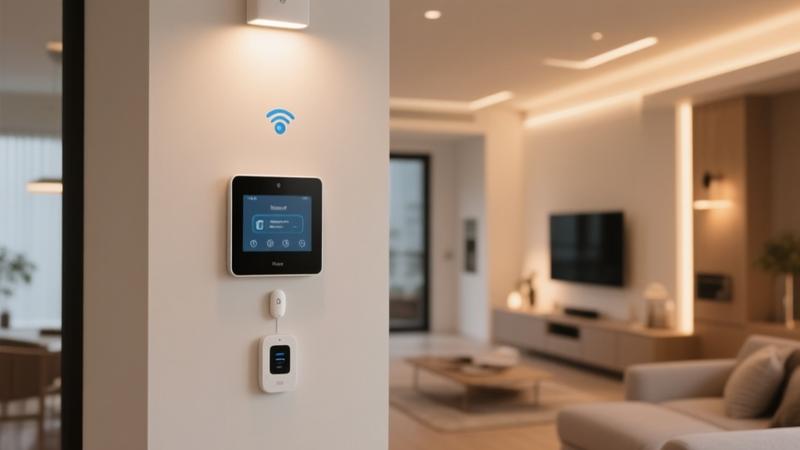
Smart Home Technology Trends for Indian Construction 2026
India's residential construction market is undergoing a rapid digital transformation, driven by rising disposable incomes and greater internet penetration. By 2026, smart home technology is expected to become a standard feature in mid-range and premium housing projects across the country. Builders are now looking to embed connectivity, automation and data analytics at the design stage rather than retrofitting later. This article explores the most important smart home trends that Indian construction firms should consider for new projects in 2026.
For Indian homeowners, the promise of lower utility bills, enhanced security and convenience are compelling reasons to adopt smart solutions. At the same time, regulatory bodies such as the Ministry of Housing and Urban Affairs are encouraging energy-efficient designs, which align well with automation. The challenge for developers is to balance cost, scalability and future-proofing while delivering a seamless user experience. The sections below walk through the core technologies, cost considerations and practical steps to integrate them during construction.
IoT Sensors in Construction and Home Automation
IoT sensors form the nervous system of any smart home, continuously gathering data about the built environment and occupant behavior. In construction, sensors are installed in walls, ceilings and service shafts to monitor temperature, humidity, vibration and air quality before the building is occupied. Once the home is ready for habitation, the same sensor network supports real-time automation of lighting, HVAC and security systems. By leveraging cloud platforms and edge computing, builders can offer homeowners dashboards that visualize energy consumption and indoor health metrics.
Common sensor types include temperature and humidity probes, passive infrared (PIR) motion detectors, CO2 and volatile organic compound (VOC) monitors, water leak detectors and structural health sensors that track stress on beams. These devices typically communicate over low-power protocols such as Zigbee, Z-Wave or Thread, which are well suited for residential environments. Integration with a central hub allows the data to trigger actions like adjusting thermostat setpoints, dimming lights or sending alerts to the homeowner's smartphone. The following list highlights the most widely used sensors in Indian smart homes.
- Temperature and humidity sensors - maintain comfort and prevent mold growth
- PIR motion sensors - enable occupancy-based lighting and security
- Air quality sensors - monitor CO2, VOCs and particulate matter
- Water leak detectors - protect against pipe bursts and roof infiltration
- Structural health sensors - detect cracks or excessive vibration in high-rise apartments
Smart Lighting Systems
Lighting accounts for up to 20 percent of residential electricity consumption in India, making it a prime target for automation. Smart LED bulbs and luminaires can be dimmed, color-tuned and scheduled through mobile apps or voice commands, reducing energy use while creating ambience for festivals and evening gatherings. Daylight harvesting sensors adjust artificial lighting levels based on natural sunlight, which is especially useful in homes with large windows facing the north or east. The result is a combination of lower bills and a more personalized living environment.
Integration with occupancy sensors further enhances efficiency by turning lights off in unoccupied rooms. For multi-unit buildings, a central lighting management platform can coordinate common areas such as corridors, stairwells and parking garages, ensuring compliance with safety codes. Homeowners also benefit from preset scenes that switch multiple devices on or off with a single tap, for example a 'movie' mode that dims lights and closes blinds. As the cost of smart bulbs falls to Rs. 500-2000 per unit, widespread adoption becomes financially viable for middle-class projects.
Automated HVAC and Climate Control
India's climate varies from hot and humid in the south to cold and dry in the north, requiring flexible heating, ventilation and air-conditioning solutions. Smart thermostats learn occupant patterns, adjust setpoints automatically and support zone-based control, which can reduce cooling loads by up to 30 percent. Integration with temperature sensors and weather forecasts enables predictive operation, so the system can pre-cool rooms before occupants arrive. These capabilities are increasingly being offered as factory-installed packages in new residential complexes.
For larger homes, a dedicated HVAC controller can manage multiple indoor units, fans and exhaust vents, creating a unified climate profile across the property. When combined with solar PV generation, the controller can prioritize renewable energy use, further lowering electricity bills. Voice assistants allow residents to change temperature settings with simple commands like 'set living room to 24 degrees'. By designing ductwork and conduit pathways during construction, installers can avoid costly retrofits later.
Smart Security Systems for Homes
Security is a top priority for Indian homeowners, and smart systems now combine video surveillance, motion detection, door/window sensors and alarm notifications into a single ecosystem. High-definition cameras with night vision can be placed at entry points and integrated with cloud storage, ensuring footage is retained even if the local device is tampered with. When a motion sensor detects unexpected activity, the system can trigger an audible alarm, flash lights and send an instant push notification to the owner's phone. Many solutions also support temporary access codes for visitors, service personnel or delivery agents.
In apartment buildings, a centralized security gateway can manage multiple units while preserving individual privacy, allowing building managers to monitor common areas without accessing private camera feeds. Integration with smart locks and intercoms enables residents to unlock doors remotely after verifying a visitor's identity. Battery-backed devices ensure operation during power outages, a common concern in many Indian cities. The combination of real-time alerts and remote control provides peace of mind for both owners and renters.
Voice Assistants and Smart Locks
Voice assistants such as Amazon Alexa, Google Home and Wipro Smart have become household staples, offering hands-free control of lights, thermostats, media and security devices. In Indian homes, regional language support for Hindi, Tamil, Telugu and other languages is expanding, making voice interaction more natural for a diverse user base. The assistants can also act as hubs, routing commands to compatible devices and providing status updates through spoken feedback. By embedding microphones and speakers in ceilings or wall panels during construction, developers can achieve optimal audio coverage.
Smart locks replace traditional deadbolts with electronic mechanisms that can be unlocked via PIN code, RFID tag, Bluetooth or biometric fingerprint. When linked to a voice assistant, residents can say 'unlock front door' and the lock will verify the command before granting access. Access logs are stored in the cloud, allowing homeowners to review who entered and when, which is useful for monitoring service personnel. For multi-family buildings, a centralized access management system can assign temporary credentials to visitors, improving security while reducing reliance on physical keys.
Energy Management Systems and Smart Water Management
Energy management platforms aggregate data from smart meters, lighting, HVAC and solar inverters to provide a holistic view of household consumption. Homeowners can set thresholds, schedule high-energy tasks during off-peak hours and receive recommendations to shift usage, which is especially valuable under time-of-day tariffs introduced by many Indian utilities. Advanced analytics can identify abnormal spikes, such as a forgotten appliance left on, and alert the user before a large bill is incurred. Integration with battery storage allows excess solar energy to be dispatched during peak demand, further reducing grid dependence.
Water scarcity in many regions has spurred the adoption of smart water solutions that detect leaks, monitor flow rates and automate irrigation based on soil moisture sensors. Leak detectors placed near water heaters, washing machines and under sinks can shut off the main valve automatically, preventing damage and wastage. Smart irrigation controllers use weather forecasts to adjust watering schedules, conserving water while keeping gardens healthy. By routing water pipes through conduit that also houses data cables, installers can add new sensors in the future without opening walls.
Cost of Smart Home Installation in India
The total cost of a fully automated smart home varies widely, ranging from Rs. 50,000 for a basic lighting and security package to Rs. 5,00,000 for comprehensive solutions that include HVAC, energy management and integrated voice control. Key cost drivers are the size of the residence, the number of devices, the choice of communication protocol and the level of professional installation required. While DIY kits are available at lower price points, a factory-installed system ensures better reliability, warranty coverage and seamless integration with building services. Builders should factor these expenses into the overall project budget and convey the long-term savings to prospective buyers.
A typical mid-range 2,000-square-foot home might allocate the following budget: smart lighting - Rs. 1,00,000 to Rs. 1,50,000 for 30 to 40 LED modules; smart thermostat and HVAC controllers - Rs. 50,000 to Rs. 1,00,000; security cameras and sensors - Rs. 60,000 to Rs. 1,20,000; smart locks - Rs. 30,000 to Rs. 60,000 for main entry and internal doors; voice assistant hubs - Rs. 5,000 to Rs. 15,000 each; and an energy management gateway - Rs. 20,000 to Rs. 40,000. Installation labor and wiring typically add another 10 to 15 percent of the device cost. By presenting these figures transparently, developers can help buyers understand the return on investment through reduced utility bills and increased property value. The clear cost breakdown also aids in financing discussions with banks or housing loan providers.
Top Smart Home Brands in India
Several manufacturers have established a strong presence in the Indian market, offering products that comply with local voltage standards and support regional languages. While no single brand dominates every segment, a combination of global and domestic players can meet most homeowner requirements. The table below provides a quick comparison of the most popular brands across key categories. Choosing a brand should be based on compatibility with the chosen communication protocol and after-sales service network.
| Brand | Core Offering | Approx Price (per device) | Notable Feature |
|---|---|---|---|
| Honeywell | Thermostats, sensors, security | Rs. 3,000 - Rs. 12,000 | Robust industrial grade hardware |
| Philips Hue | Smart lighting ecosystem | Rs. 1,200 - Rs. 3,500 | Extensive color palette and third-party integration |
| TP-Link | Wi-Fi plugs, switches, routers | Rs. 800 - Rs. 2,500 | Easy app setup and affordable pricing |
| Amazon Alexa | Voice assistant hub, Echo devices | Rs. 2,500 - Rs. 9,000 | Large skill ecosystem and Indian language support |
| Google Home | Voice assistant hub, Nest devices | Rs. 3,000 - Rs. 10,000 | AI powered routines and tight Android integration |
| Wipro Smart | Home automation panels, lighting, security | Rs. 5,000 - Rs. 15,000 | Local Indian support and customizable solutions |
Planning Smart Home Integration During Construction
The most cost-effective way to embed smart technology is to plan the infrastructure at the design stage, before walls are closed and finishes are applied. This involves laying conduit pathways for data, power and low-voltage wiring, reserving space in the electrical panel for dedicated smart home circuits, and installing ceiling boxes that can accommodate cameras or speakers. Coordination between architects, MEP engineers and system integrators ensures that sensor placement aligns with functional zones such as living areas, kitchens and bathrooms. Early planning also allows for future upgrades, as new standards like Matter are expected to unify device compatibility across brands.
Builders should create a detailed smart home specification document that lists required devices, communication protocols, warranty terms and maintenance responsibilities. Offering a modular package gives buyers the flexibility to add or remove features based on budget, while still preserving the underlying infrastructure. Training onsite staff on proper termination of Ethernet and fiber cables reduces installation errors that could affect reliability. Finally, a post-occupancy handover that includes user manuals and app walkthroughs helps homeowners make the most of their automated home from day one.
Future Outlook and Benefits for Indian Homeowners
Looking ahead, artificial intelligence and edge computing will enable homes to make decisions locally, reducing latency and dependence on internet connectivity. The emergence of the Matter protocol, backed by major manufacturers, promises true interoperability, allowing devices from different brands to work together without custom bridges. Combined with increasing adoption of rooftop solar and battery storage, smart homes will become integral components of a resilient micro-grid at the household level. These trends suggest that smart home technology will shift from a luxury add-on to a core element of sustainable living in India.
For homeowners, the immediate benefits include lower energy bills, enhanced safety, convenience of voice-controlled appliances and increased resale value as buyers seek modern features. Over the long term, data collected by sensors can inform better maintenance practices, such as detecting early signs of water pipe corrosion or HVAC inefficiency. As the market matures, financing options and government incentives for energy-efficient homes are expected to make smart upgrades more affordable. By embracing these technologies during construction, developers can differentiate their projects and deliver lasting value to Indian families.
Related: Terrace Garden and Green Roof Guide for Indian Homes 2026
Related: How to Choose the Right Insulation Material for Your Home