
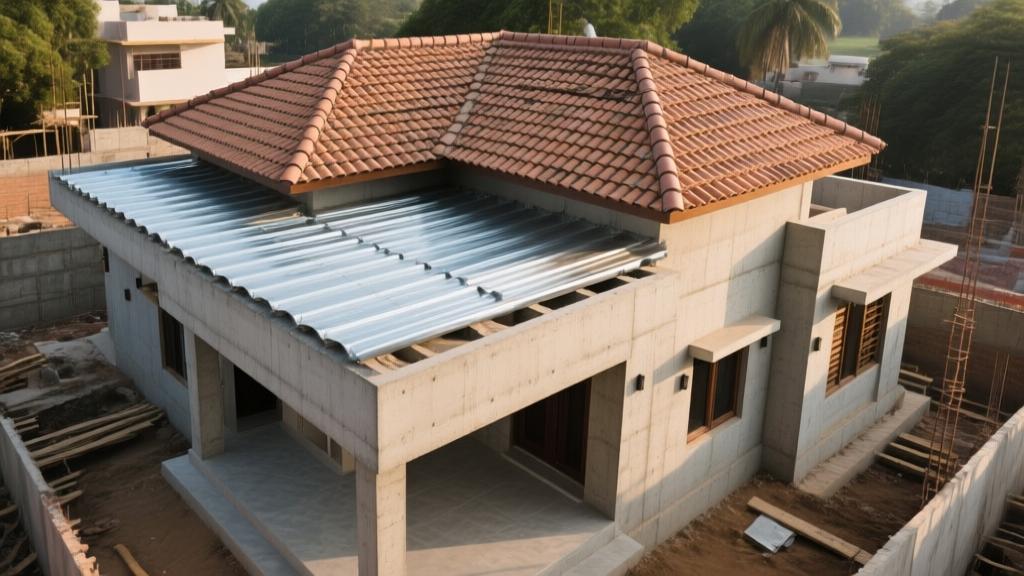
Roofing Materials for Indian Homes 2026
Why Roofing Material Selection Matters in India
Choosing the right roofing material is one of the most critical decisions for any Indian homeowner or builder. The roof protects the structure from harsh weather, contributes to interior comfort, and influences long term maintenance costs. India's climate varies from scorching hot deserts in Rajasthan to heavy monsoon rains in the coastal states and cold winters in the Himalayan region, so a one-size-fits-all solution rarely works. Understanding the strengths and limitations of each roofing material helps you balance cost, durability, heat insulation and aesthetic appeal.
Reinforced Cement Concrete (RCC) Slab Roofing
RCC slab roofing is a solid, monolithic construction method that uses a mixture of cement, sand, aggregates and steel reinforcement. The slab is poured on site to create a flat, load-bearing surface that can support heavy equipment, solar panels or even a second storey. RCC roofs are especially popular in high-rise apartments, commercial buildings and premium villas where structural strength is a priority. The RCC roof cost typically ranges from Rs.1500 to Rs.2500 per square foot, depending on the grade of concrete, reinforcement density and finish work.
Durability is a strong point for RCC. A properly designed and constructed slab can last 30 to 50 years with minimal structural degradation. The thermal mass of concrete absorbs heat during the day and releases it slowly at night, providing a natural temperature buffering effect. However, without adequate insulation, the slab can become a heat sink in hot climates, increasing indoor cooling loads.
- Pros: High load-bearing capacity, fire resistant, long lifespan, can accommodate heavy fixtures.
- Cons: Higher initial cost, requires skilled labor, prone to cracking if not properly cured, needs waterproofing membrane.
Galvanised Iron (GI) Sheet Roofing
GI sheet roofing consists of thin sheets of iron coated with a layer of zinc to prevent corrosion. The sheets are lightweight, easy to transport and can be installed quickly using simple tools, making them a favorite for low-budget housing and temporary structures. GI sheets are available in various thicknesses, typically ranging from 0.4 mm to 0.9 mm, and can be painted or coated for additional protection. The average cost of a GI sheet roof is between Rs.50 and Rs.120 per square foot, including labor and basic fixing accessories.
In terms of durability, a well-maintained GI sheet roof can serve for 10 to 15 years in most Indian climates. The zinc coating offers good resistance to rust, but the material is vulnerable to rusting in coastal areas where salt-laden air accelerates corrosion. Heat insulation is low; metal conducts heat rapidly, so interior temperatures can rise sharply under direct sunlight unless a thermal barrier or reflective paint is applied.
- Pros: Low cost, quick installation, lightweight, recyclable.
- Cons: Low thermal insulation, prone to noise during rain, corrosion risk in high humidity, limited lifespan compared to other options.
Clay Tile Roofing
Clay tiles are made from natural clay fired at high temperatures to achieve hardness and water resistance. The classic red or orange tiles give a distinctive aesthetic that blends well with traditional Indian architecture and modern designs alike. A typical clay tile roof can be installed over a timber or concrete deck, and the tiles interlock to create a waterproof barrier. The market price for clay tiles is usually Rs.100 to Rs.200 per square foot, inclusive of installation, though premium designer tiles can cost more.
Clay tiles are renowned for their durability, often lasting 30 to 50 years with proper maintenance. Their porous structure provides good thermal insulation, keeping interiors cooler in hot weather and retaining warmth during winter nights. However, the weight of clay tiles (around 30 kg per square meter) requires a strong supporting structure, and the tiles can break under heavy impact or during severe hailstorms.
- Pros: Excellent heat insulation, long lifespan, fire resistant, aesthetically appealing.
- Cons: Heavy, higher structural load, higher initial cost than metal sheets, can be brittle in extreme temperature changes.
Polycarbonate Roofing
Polycarbonate roofing uses sheets of engineered plastic that are lightweight, impact-resistant and highly transparent. The material is available in clear, tinted or frosted finishes, allowing homeowners to harness natural daylight while reducing the need for artificial lighting. Polycarbonate sheets are typically installed with a simple framing system and can be cut to size on site. Prices for polycarbonate roofing range from Rs.200 to Rs.500 per square foot, depending on thickness (4 mm to 10 mm) and UV coating.
Durability of polycarbonate sheets is moderate; they can last 10 to 15 years before yellowing or loss of mechanical strength, especially in regions with intense UV exposure. Heat insulation is moderate; clear sheets transmit heat while tinted or double-wall versions provide better thermal performance. Polycarbonate roofs require periodic cleaning to maintain transparency and may need replacement of damaged panels after severe hail.
- Pros: Lightweight, high impact resistance, allows natural light, easy to install.
- Cons: Higher cost than metal, moderate lifespan, can become brittle over time, lower fire resistance.
Cement Sheet Roofing
Cement sheet roofing, also known as fibre-cement board, combines cement, cellulose fibres and additives to create a rigid, fire-resistant panel. The sheets are manufactured in standard sizes (typically 8 ft x 4 ft) and can be fixed directly onto a timber or steel frame. Cement sheets are versatile, offering a smooth finish that can be painted or textured to suit design preferences. The cost of cement sheet roofing is generally Rs.80 to Rs.150 per square foot, making it an affordable middle-ground option.
In terms of durability, cement sheets can serve for 15 to 20 years if protected from prolonged water exposure and mechanical damage. They provide moderate thermal insulation, especially when combined with an underlay of insulation material. The material is also resistant to fire and termites, which adds to its suitability for low-maintenance homes.
- Pros: Fire resistant, termite proof, moderate cost, can be painted.
- Cons: Heavier than metal sheets, prone to cracking if not properly supported, moderate lifespan.
Metal Roofing (Corrugated Steel, Aluminium, Zinc-Aluminium Alloy)
Metal roofing in India usually refers to corrugated steel, aluminium or zinc-aluminium alloy sheets that are pre-painted or coated for corrosion protection. The corrugated profile adds rigidity, allowing the sheets to span larger distances without additional support. Metal roofs are popular for industrial, agricultural and residential projects because of their speed of installation and long service life. The price range for metal roofing varies from Rs.70 to Rs.180 per square foot, depending on material thickness, coating type and finish.
Durability of metal roofing is impressive, with a typical lifespan of 20 to 30 years when the protective coating remains intact. Heat insulation is low, but reflective coatings and ventilated roofing systems can significantly reduce heat gain. Metal roofs are also recyclable, making them an environmentally friendly choice for sustainable construction.
- Pros: Long lifespan, lightweight, recyclable, good strength-to-weight ratio, suitable for large spans.
- Cons: Low thermal insulation unless combined with reflective paint, can be noisy during rain, may rust if coating is damaged.
Side by Side Comparison of Popular Roofing Materials
| Material | Cost per sq ft (Rs.) | Expected Lifespan (years) | Heat Insulation | Maintenance Frequency | Ideal Climate |
|---|---|---|---|---|---|
| RCC Slab | 1500 - 2500 | 30 - 50 | Medium (needs insulation) | Low (waterproofing every 5-7 years) | All climates, best with insulation in hot zones |
| GI Sheet | 50 - 120 | 10 - 15 | Low | Medium (paint/coating every 3-5 years) | Hot and dry regions, not ideal for coastal humidity |
| Clay Tile | 100 - 200 | 30 - 50 | High | Low (inspect for broken tiles annually) | Hot, dry and moderate climates; good for heritage homes |
| Polycarbonate | 200 - 500 | 10 - 15 | Medium (tinted versions better) | Medium (cleaning and check for cracks yearly) | Hot and sunny areas where daylight is valued |
| Cement Sheet | 80 - 150 | 15 - 20 | Medium | Medium (repaint every 5 years) | All climates, especially where fire resistance is needed |
| Metal Roofing | 70 - 180 | 20 - 30 | Low (improved with reflective coating) | Low (repaint/coating every 5-7 years) | All climates, especially monsoon prone areas due to water runoff |
Choosing the Best Roofing Material for Your Climate and Budget
When deciding on a roofing material, start by evaluating the dominant climate of your location. In hot and arid zones such as Rajasthan or Gujarat, materials with high thermal inertia like clay tiles or RCC slabs combined with insulation can keep interiors cooler. For regions with heavy monsoon rains like Kerala or West Bengal, a roof that offers excellent water runoff and resistance to corrosion, such as metal roofing with proper coating, is advisable.
In colder hill stations such as Shimla or Darjeeling, the roof must handle low temperatures and occasional snowfall. RCC slabs with insulation or metal roofing with a snow load rating provide the necessary strength and thermal performance. Polycarbonate roofing can be used for skylight applications in cold climates, but it should be paired with an insulating layer to prevent heat loss.
Budget constraints also influence the choice. If the primary concern is low upfront cost, GI sheet or cement sheet roofs are the most economical options. However, remember that lower initial cost may translate into higher long-term maintenance expenses, especially in humid or coastal areas where corrosion is a risk.
Another factor is the structural capacity of the building. Heavy materials such as clay tiles and RCC slabs require a robust supporting framework, while lightweight options like polycarbonate or metal sheets can be installed on modest frames. Always consult a structural engineer before selecting a material that adds significant load to the roof.
Finally, consider the aesthetic expectations of the homeowner. Traditional Indian homes often feature clay tile roofs that complement the cultural vibe, whereas modern apartments may prefer sleek metal or RCC slab finishes. The visual impact of the roof can affect the resale value of the property, so choose a material that aligns with both functional needs and design aspirations.
Maintenance Tips to Extend the Life of Your Roof
Regular inspection is the cornerstone of roof longevity. Schedule a visual check at least twice a year, preferably before and after the monsoon season, to identify loose sheets, cracked tiles or water pooling. Clear any debris such as leaves, twigs or bird nests that can trap moisture and promote corrosion or fungal growth.
For metal roofs, apply a fresh coat of protective paint or zinc coating every 5 to 7 years, especially in coastal regions where salt spray accelerates rust. GI sheet roofs benefit from a reflective paint that also reduces heat gain, making indoor cooling more efficient.
Clay tile roofs require occasional resealing of the mortar joints and replacement of broken tiles to maintain water tightness. Use a compatible cement-sand mortar mix and avoid heavy impact tools that can cause cracking.
RCC slabs should be checked for cracks or signs of water infiltration. Applying a waterproofing membrane or elastomeric coating every 5 to 7 years can prevent seepage and protect the concrete from aggressive weathering.
Polycarbonate sheets need gentle cleaning with a soft cloth and mild detergent to maintain clarity. Avoid abrasive cleaners that can scratch the surface and reduce UV protection.
Cost Optimization Strategies
One effective way to reduce roofing costs is to combine materials. For example, a hybrid roof that uses an RCC slab with a lightweight metal or polycarbonate top layer can provide structural strength while keeping the overall weight low. This approach also allows you to benefit from the thermal mass of concrete and the reflectivity of metal.
Purchasing materials in bulk from reputable suppliers often yields discounts, especially for large residential projects. Additionally, opting for locally produced clay tiles or cement sheets can lower transportation costs and support regional economies.
Consider using recycled metal sheets or reclaimed clay tiles for renovation projects. These options are environmentally friendly and can significantly cut material expenses while still delivering reliable performance.
Future Trends in Roofing for Indian Homes
As sustainability becomes a priority, many builders are integrating solar panels with roofing systems. RCC slabs provide an ideal platform for mounting photovoltaic arrays due to their load-bearing capacity. Metal roofs with built-in solar clips are also gaining popularity because of the ease of installation.
Cool roof technologies, such as reflective coatings on metal or cement sheets, are being promoted by the Indian government to reduce cooling loads in hot cities. These coatings can lower roof surface temperatures by up to 15 °C, translating into energy savings.
Innovations in polymer roofing, including multi-wall polycarbonate and thermoplastic polyolefin (TPO) membranes, are offering better thermal performance and longer lifespans. While the upfront cost is higher, the reduced maintenance and energy benefits can make them attractive for premium residential projects.
Conclusion
Selecting the right roofing material involves balancing cost, durability, heat insulation, maintenance needs and climate suitability. RCC slab roofs deliver unmatched strength and longevity but require proper waterproofing and insulation for hot climates. GI sheet roofs are affordable and quick to install, yet they need protective coatings to combat corrosion and heat gain. Clay tile roofs provide excellent thermal performance and aesthetic appeal, though they demand a strong supporting structure.
Polycarbonate roofing offers light transmission and impact resistance, making it suitable for daylight-rich designs, while cement sheet roofing serves as a fire-resistant, medium-cost option. Metal roofing stands out for its long lifespan, recyclability and adaptability to various climate conditions, especially when paired with reflective finishes. By carefully evaluating the local climate, structural constraints and budget, Indian homeowners can choose a roofing solution that ensures comfort, durability and value for years to come.
Related: Terrace Garden and Green Roof Guide for Indian Homes 2026
Related: RCC Roof Waterproofing Cost 2026: Methods, Rates and Complete Guide
Related: Best Time to Build a House in India - Seasonal Construction Guide 2026